If you share your home with a dog, you have probably stood at the back door watching it tear across a lawn that used to look presentable and wondered if there was a better way to do this.
Americans spent $158 billion on pets in 2024, according to the American Pet Products Association. That figure reflects how central pets have become to the way people live. What it does not always reflect is how the spaces those pets live in are designed around them.
A backyard remodeling project built with pets genuinely in mind is one of the most practical and lasting investments a Chicago pet owner can make.
The guide below covers what that kind of project entails: how space is zoned, which surfaces hold up, which plants to avoid, and why the right design process makes all the difference.
Designing a Backyard for Pets Starts with Zoning
The single most effective thing a landscape designer can do for a pet-owning household is create distinct zones within the same outdoor space. One area for pets to run, play, and do what they do. Another for outdoor dining, entertaining, and relaxing.
The two do not need to be divided by a fence or a wall. They can be defined through surface changes, planting borders, or grade transitions that feel natural rather than imposed.
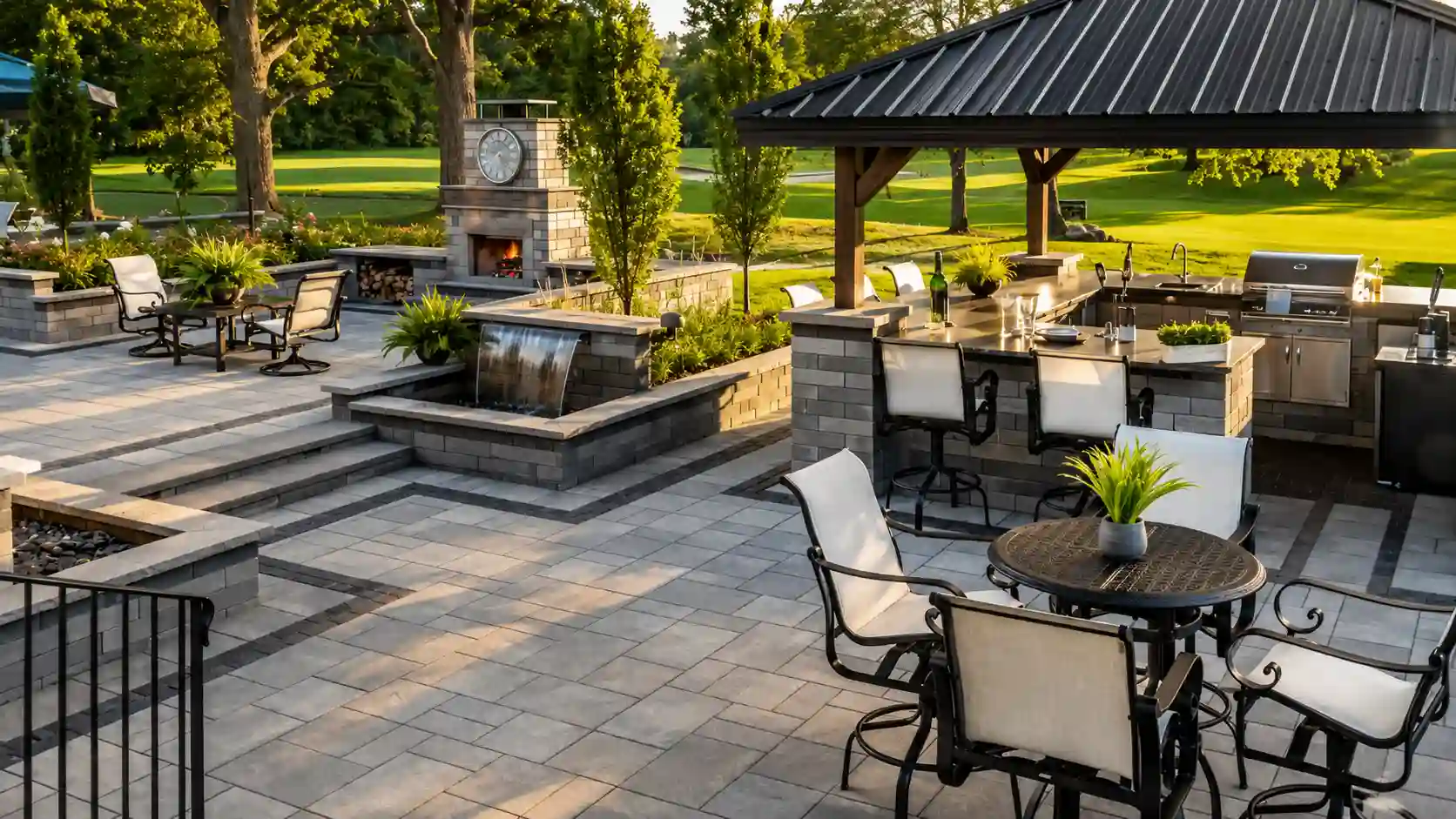
When zoning is designed from the start, a pet-friendly yard does not have to look like one. The patio reads as a luxury outdoor living space. The pet zone handles the activity without it bleeding into the rest of the property. Both exist in the same backyard without compromising each other, and the whole space retains its value and appearance over time.
Fencing: The Foundation of a Pet-Safe Outdoor Space
For most dog owners, a secure perimeter is non-negotiable. The right fencing for a pet-friendly yard depends on the dog: its size, its temperament, and whether it tends to climb, dig, or run the fence line. A 4-foot fence works for many breeds. For larger or more determined dogs, 6 feet is a better baseline, and some designs also need to address gap control at ground level.
Material matters as much as height in the Chicago area. Wood fencing expands and contracts significantly through Illinois winters, and panels that fit tightly in October can develop gaps by March.
Aluminum and steel maintain their dimensions more reliably through freeze-thaw cycles. Custom paver borders and hardscape integrated along the fence line also address the dig-under vulnerabilities that a post-and-panel fence alone does not resolve.
Surfaces That Work for Pets and Look the Part
Natural grass and active dogs are not always compatible. Spring in Chicagoland brings weeks of mud that can turn a turf lawn into a tracking problem, and high-traffic zones near doors, along fence lines, and in play areas take damage that natural grass struggles to recover from through the season.
Professional artificial turf installation is one of the most practical investments available for pet owners. Modern synthetic grass drains efficiently, resists odors with proper maintenance, and withstands years of heavy use without the bare patches, reseeding cycles, or mud that follow a well-used natural lawn. It also looks consistent year-round in a way that a busy natural lawn rarely achieves.
In areas where hardscape makes more sense, pavers and architectural stone provide an additional layer of durability. They clean easily, perform well through Chicago winters, and can be designed to complement rather than clash with turf areas in the same yard.
What Should You Know About Plants and Pet Safety?
Not all plants that look beautiful in a landscape are safe for the animals living alongside them. Dogs and cats are curious, and some of the most common ornamental choices, including azaleas, rhododendrons, and daffodils, can cause serious health problems if ingested. English ivy, while popular as a ground cover, is also on the list of plants to approach with caution in a pet-owning household.
A professional landscape design team accounts for this from the beginning rather than retrofitting around it. Plant selection starts with what is safe, then builds toward what is beautiful.
There are many native Illinois species and hardy perennials that are well-regarded as pet-friendly, including black-eyed Susans, coneflowers, and ornamental grasses, and a well-selected palette can be just as visually strong as one that ignores the question entirely.
Shade, Shelter, and Comfort Features Pets Actually Use
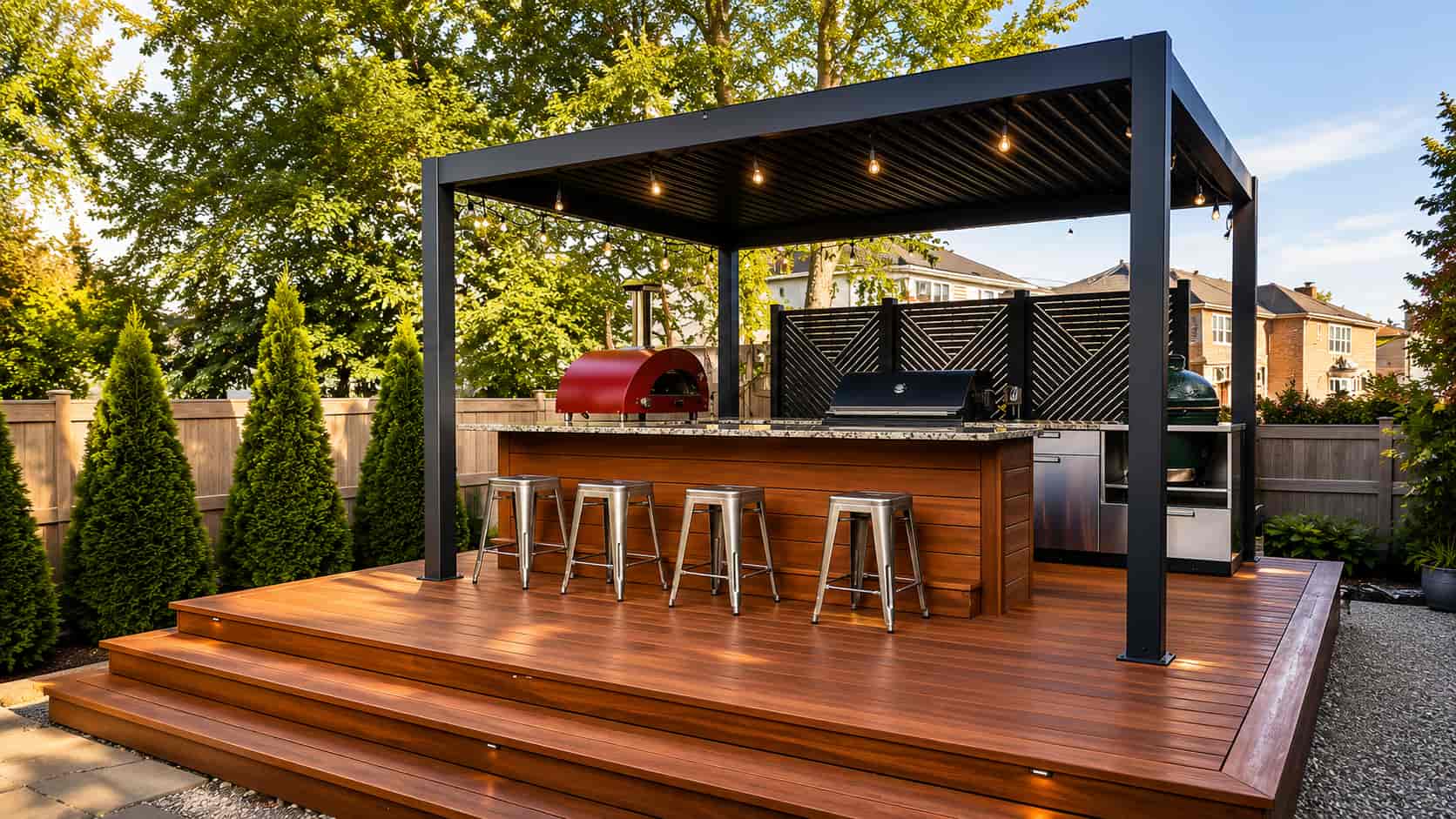
Chicago summers bring sustained heat, and a yard without shade is a yard a dog will not want to spend time in during the warmest part of the day. Pergolas, shade sails, and strategically positioned canopy trees extend usability for both pets and people, adding architectural presence to the outdoor space rather than just solving a functional problem.
Dedicated water access is worth considering alongside shade. A ground-level water feature that a dog can drink from, or wade through on hot days, is a genuinely useful addition that also reads as a designed landscape element rather than a tacked-on afterthought. Combined with a defined shaded rest area, these features create a yard that a pet will actually gravitate toward and use.
How 3D Landscape Design Makes Pet-Friendly Projects Work
Every decision in a pet-friendly backyard remodel is connected to the others. The fencing affects surface selection. The surface choices affect drainage. The planting plan determines what is accessible and what is not. Getting all of those variables right before anything is installed is exactly what 3D landscape design makes possible.
A full rendering of the finished space before construction begins means every zone, surface, and feature can be evaluated together rather than sorted out in sequence on-site. For a project built around both lifestyle and pet safety, that visibility before committing to the outcome is not an added benefit. It is what makes the project work the first time.
Backyard Remodeling Across Naperville and the Greater Chicago Area
Luxterra Outdoors is a premier landscape design-build company serving Naperville and the greater Chicago area with over 35 years of combined team experience. Our founder, Carmelo Guevara Jr., holds a Bachelor’s degree in Landscape Architecture from the University of Illinois at Urbana-Champaign, and our team includes Techo-Pro-certified installers who carry active general liability insurance and workers’ compensation coverage for every project.
Every complete backyard renovation we deliver begins with understanding how the property is actually used, including by the household pets. From zoning and surface selection to fencing, planting, and shade design, we build outdoor spaces that hold up to real life and look great doing it.
Ready to Build a Backyard Your Pets Will Love?
The next step is a free consultation where we walk through your property, your pets’ needs, and how a professionally designed outdoor space could benefit your household. Schedule your free consultation and let’s build something that works for everyone in your home.