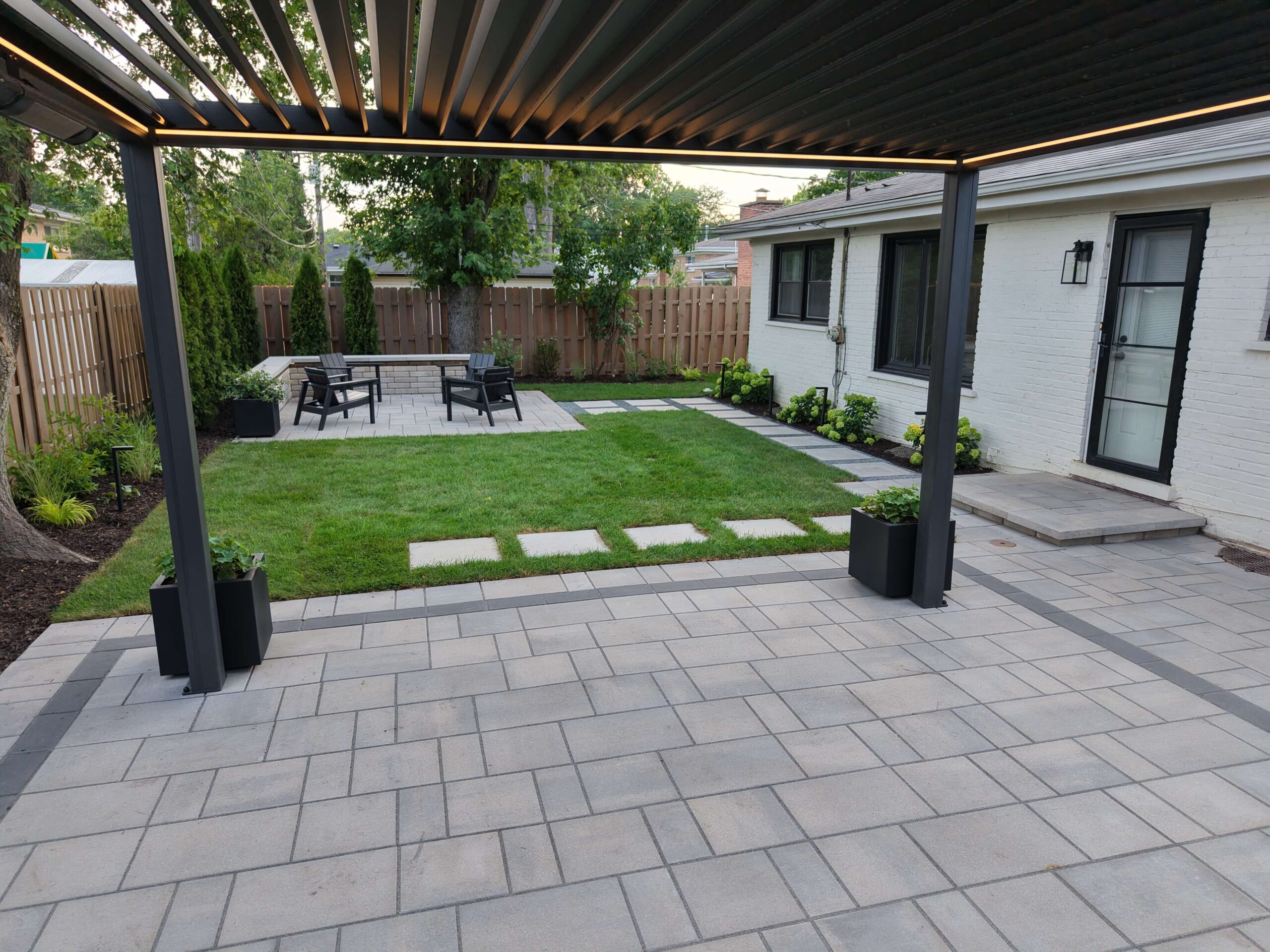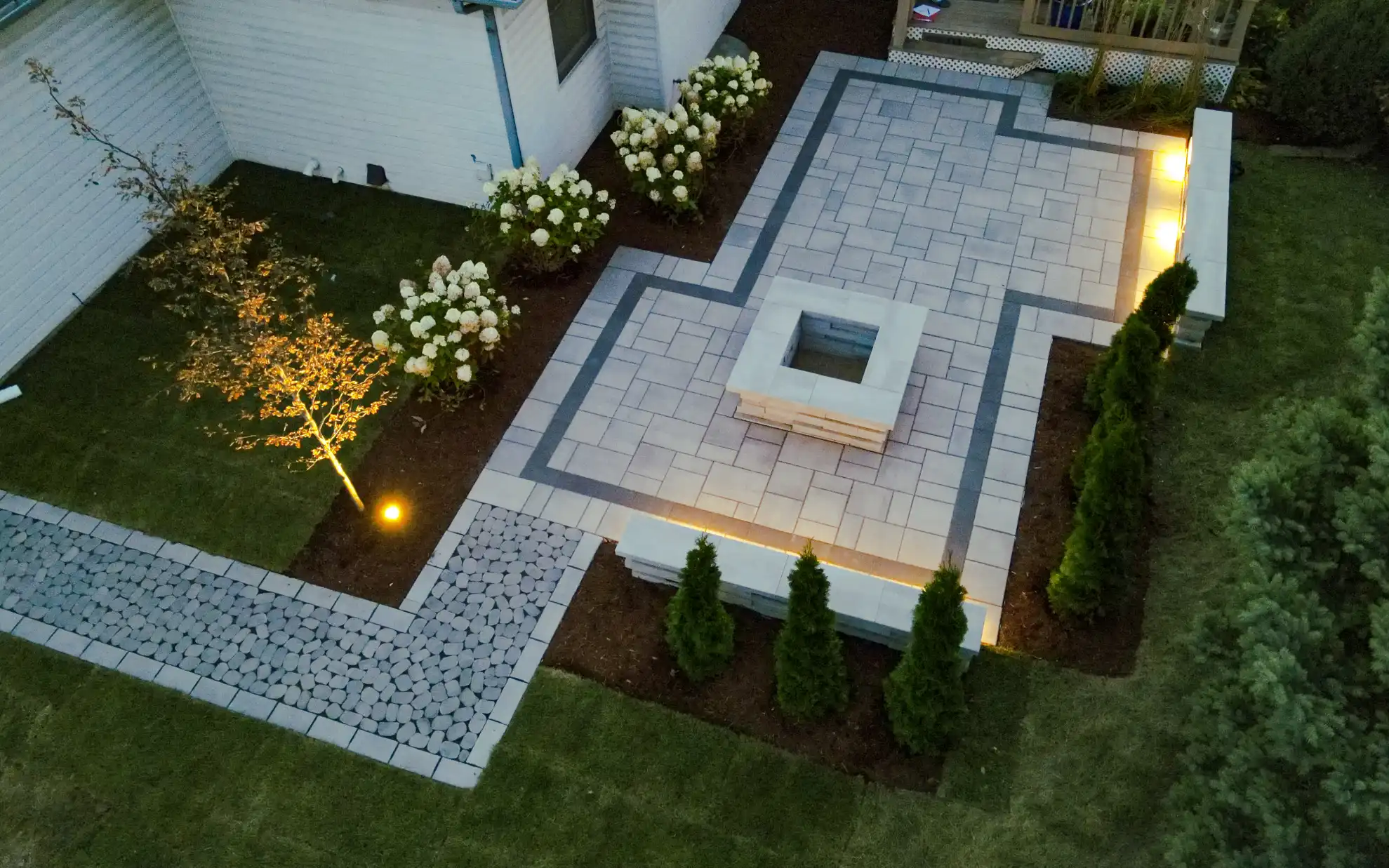
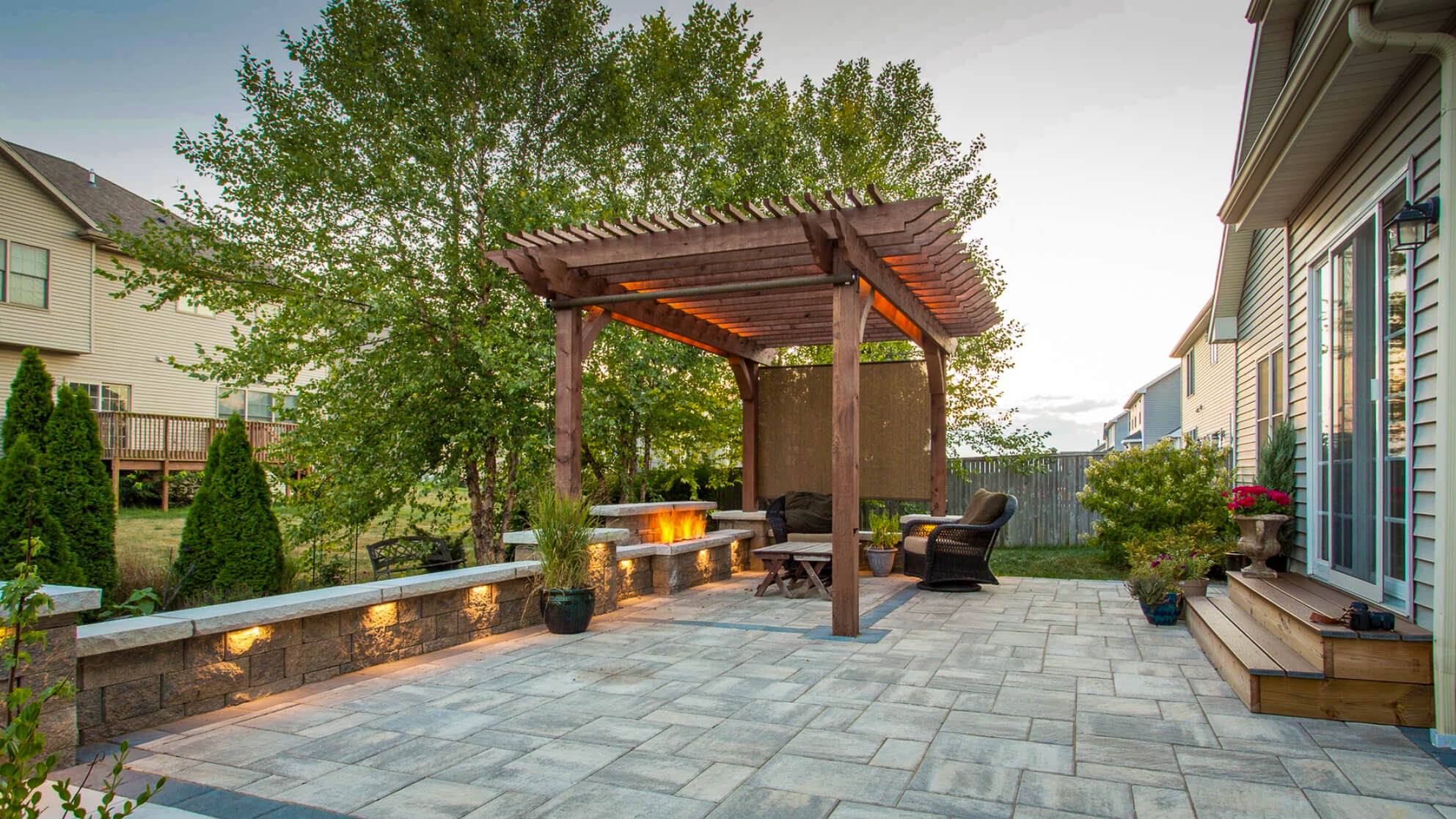
A paver patio may look like a finished surface, but much of its long-term performance is determined by construction you never see. When individual pavers settle, edges dip, or low spots begin collecting water, the visible problem often starts somewhere beneath the patio.
Understanding why pavers sink requires looking at the entire system below them, from the native soil to the aggregate base, bedding layer, edge restraints, and joints. In Naperville, drainage and seasonal freeze-thaw conditions make those details particularly important. Proper preparation gives the patio a stable foundation and lets each layer do its intended job.
Why Do Pavers Sink After Installation?
Pavers typically sink when the supporting materials settle, shift, erode, or weren’t properly prepared in the first place. The cause may be localized beneath a few units or involve a larger portion of the patio. Finding the underlying cause matters because simply raising the affected pavers may not prevent the problem from returning.
Common contributors include:
- Insufficient excavation or unsuitable soil left beneath the patio
- Inadequate or poorly compacted aggregate
- Incorrect bedding materials or excessive bedding thickness
- Water moving through or beneath the base
- Weak or missing edge restraint
- Improper grading
- Disturbance from underground utilities, roots, or previous excavation
These problems can also interact. Poor drainage, for example, may become much more damaging when the underlying base was already inadequately compacted. A quality installation therefore treats the patio as a connected system rather than solving each layer independently.
Proper Paver Patio Base Preparation Starts With the Soil
Before aggregate or sand reaches the site, the installer has to understand what the patio will rest on. Native soil conditions influence excavation, drainage, compaction, and the amount of base material required. Areas containing loose fill or soil disturbed during previous construction may require different preparation than stable, undisturbed ground.
Organic material and unsuitable soil should not simply remain beneath the patio because they can compress or change over time. The prepared subgrade needs to provide consistent support for the layers installed above it. If the foundation varies significantly from one portion of the patio to another, uneven settlement becomes more likely.
How Deep Should You Dig for Pavers?
We at Luxterra Outdoors use 8” excavation, filled back with 6” of ¾’ clean limestone and a half-inch bedding layer of limestone chips where the pavers will be set. This type of base is considered a permeable base and the industry standard; long are the days when the base was aggregates and sand.
But rules such as “always dig six inches” can be misleading. A specification suitable for one residential site may be inadequate or unnecessarily deep somewhere else. For example, a newly built home may still be settling, while a home built 30 years ago is fully settled. So the risk of a patio settling in a newly built home will be greater. To prevent that, you may need to get to the subbase, which is 2-3 feet deep, and fill it back with limestone gravel and compact it. Excavation should follow the needs of the actual patio system rather than a single number taken from a generic installation guide.
Can You Lay Pavers Directly on Dirt?
Placing patio pavers directly over ordinary soil may look acceptable immediately after installation, but you should never place pavers directly on dirt because soil generally does not provide the consistent structural support expected from a properly constructed base. Moisture changes, loading, and soil movement can cause individual areas to settle differently. Once that happens, the finished surface can become uneven even if every paver was originally installed level.
Gravel vs. Sand Under Pavers: They Have Different Jobs
The question of gravel vs. sand under pavers sometimes suggests that an installer chooses one or the other. In a traditional paver installation, however, aggregate base and bedding material serve different purposes. Don’t treat them as interchangeable layers.
The Gravel Base Provides Structural Support
A properly selected aggregate base creates the primary structural layer beneath the patio. Install and compact it so the particles interlock and create a stable platform. The appropriate material and base thickness depend on the installation system and site conditions. Main options include dense grade and open grade.
| Base Type | Dense-Graded Aggregate | Open-Graded Aggregate |
| Composition | Mix of different stone sizes plus fines | Clean, similarly sized angular stone with few or no fines |
| How It Stabilizes | Compacts tightly as smaller particles fill spaces between larger stone | Relies heavily on angular stone interlocking while leaving open voids |
| Water Movement | Lower permeability because the compacted fines reduce open space | High permeability because interconnected voids allow water to move through |
| Typical Advantage | Creates a dense, stable traditional base | Combines structural support with rapid drainage |
| Drainage Approach | Surface grading and the overall drainage plan are especially important | Useful in systems designed to move water through the base |
| Best Fit | Traditional installations where a dense compacted base suits the site and system | Installations where drainage requirements and the overall base design favor an open-graded system |
Bedding limestone chips create the Setting Layer
Bedding material sits above the structural base and provides a consistent surface for setting the pavers. Its purpose is not to replace several inches of missing aggregate or correct major variations in the excavation. Excessive bedding material can create another unstable layer beneath the finished surface.
Keeping those functions separate is fundamental to paver patio base preparation. The aggregate carries and distributes loads, while the bedding layer helps establish the final setting surface. Confusing the two can compromise an otherwise attractive installation.
Do You Need Landscape Fabric Under Pavers?
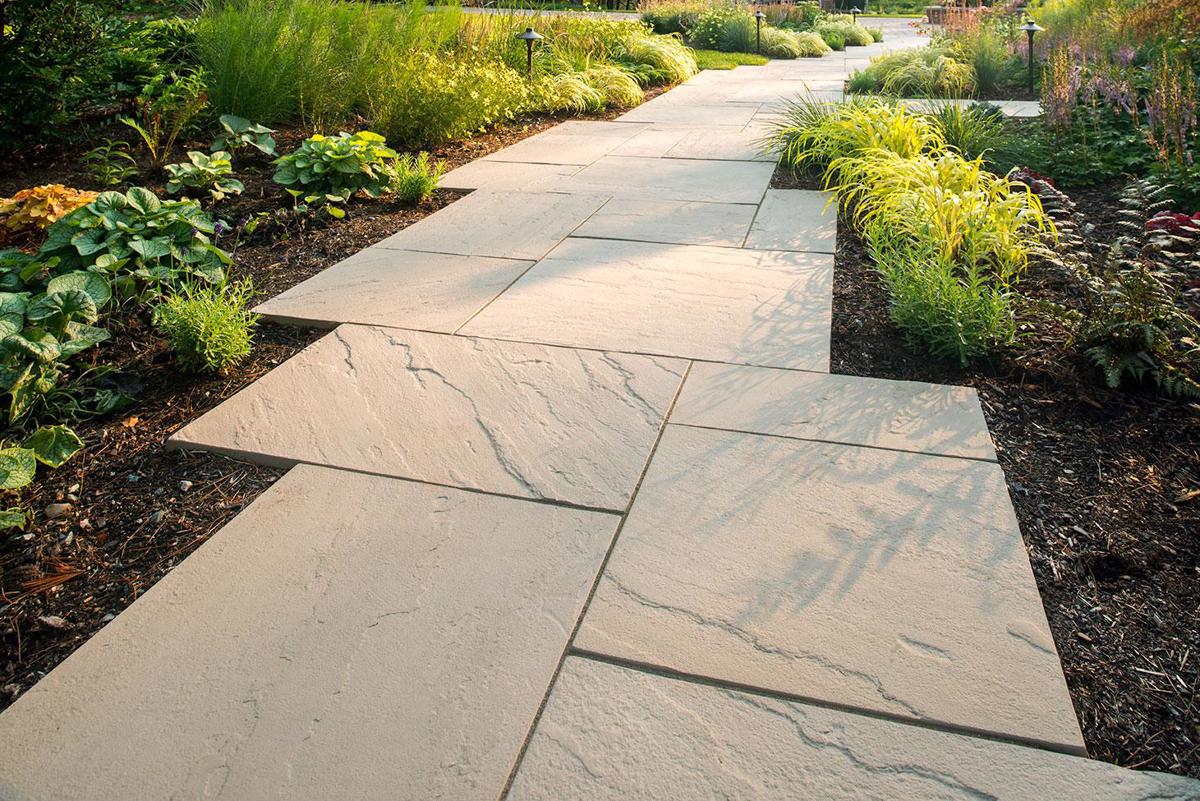
Geotextile fabric may be useful in certain paver systems, particularly where separating the aggregate base from the underlying soil helps prevent mixing. However, select it based on site conditions and the intended base design. It is not automatically necessary beneath every patio simply because landscape fabric is commonly sold for outdoor projects.
Also distinguish geotextile used for structural separation from ordinary weed-barrier fabric. Fabric beneath the base does not eliminate every future weed because organic material can accumulate in joints from above. More importantly, fabric cannot compensate for poor excavation, inadequate aggregate, or improper compaction.
Drainage Under Pavers Matters Above and Below the Surface
Water is one of the most important factors in patio performance. The finished surface needs appropriate pitch so runoff moves toward a suitable destination instead of collecting against the house or creating persistent low spots. You should also consider the base and surrounding landscape because water can move through joints and adjacent soils.
Naperville’s freezing winters add another reason to manage moisture carefully. Water in susceptible soils can contribute to frost-related movement as temperatures fall and rise, while saturated or eroding areas may weaken support beneath portions of the patio. Good drainage under pavers starts with understanding where water originates, where it travels, and where it discharges.
Planning gets more complicated around downspouts, retaining walls, outdoor kitchens, steps, and other hardscape. You can’t design a patio in isolation when nearby features change runoff or elevations. Luxterra Outdoors evaluates drainage as part of the broader landscape design so the hardscape works with the surrounding property.
Edge Restraints Help Keep the Patio Together
The perimeter of a paver patio needs support because edge units don’t have neighboring pavers on every side. Appropriate edge restraints like concrete edging anf paver plastic edging help prevent lateral movement that can widen joints and spread the paving pattern. Once perimeter movement begins, the effects may gradually become visible farther into the patio.
Edge restraint is not a substitute for a stable base, however. Strong edges cannot correct poorly compacted aggregate or significant drainage problems underneath the surface. Like other components, the restraint works best as part of a properly constructed system.
What Does Polymeric Sand Actually Do?
Install polymeric sand in paver joints after the paving units are set. When properly installed and activated according to product requirements, it helps stabilize the joints and resist material washing out. It can also reduce opportunities for weed growth and insect activity in properly maintained joints.
Polymeric sand does not provide the structural foundation beneath the patio. If pavers are sinking because the base has settled or water is eroding material below them, adding fresh joint sand won’t fix the cause. Treating it as a repair for structural settlement can temporarily improve appearance while leaving the underlying problem untouched.
Proper Compaction Is One of the Biggest Differences Beneath the Surface
Compaction gets relatively little attention when choosing paver colors and patterns, yet it strongly influences the finished patio. Both the prepared subgrade and aggregate system need proper attention so materials don’t consolidate excessively once furniture, foot traffic, and environmental conditions begin acting on them.
Uniformity matters as much as simply running compaction equipment over the site. Utility trenches, filled areas, edges, and difficult-to-reach sections may behave differently if they receive less preparation than the main field. These inconsistencies can eventually appear at the surface as dips or isolated settlement.
This is one reason premium installation quality is difficult to judge from the finished patio alone. Some of the most important craftsmanship has already been buried by the time the first gathering takes place.
Signs Your Patio May Have a Base or Drainage Problem
A small amount of movement doesn’t automatically reveal the exact cause, so evaluate the entire area before deciding on a repair. Surface patterns can provide useful clues about what is happening underneath. The goal is to determine whether the problem involves an individual unit or the system supporting it.
Watch for conditions such as:
- Recurring low spots where water collects
- Multiple pavers settling together
- Edges spreading or dropping
- Joints repeatedly losing material
- Noticeable changes after winter
- Settlement along a former trench or disturbed area
- Water consistently moving toward the house
Resetting a few pavers may be appropriate when the problem is truly localized. When settlement continues returning, however, repairing only the visible surface can become a cycle because the underlying condition remains unchanged.
A Long-Lasting Patio Is Built From the Ground Up
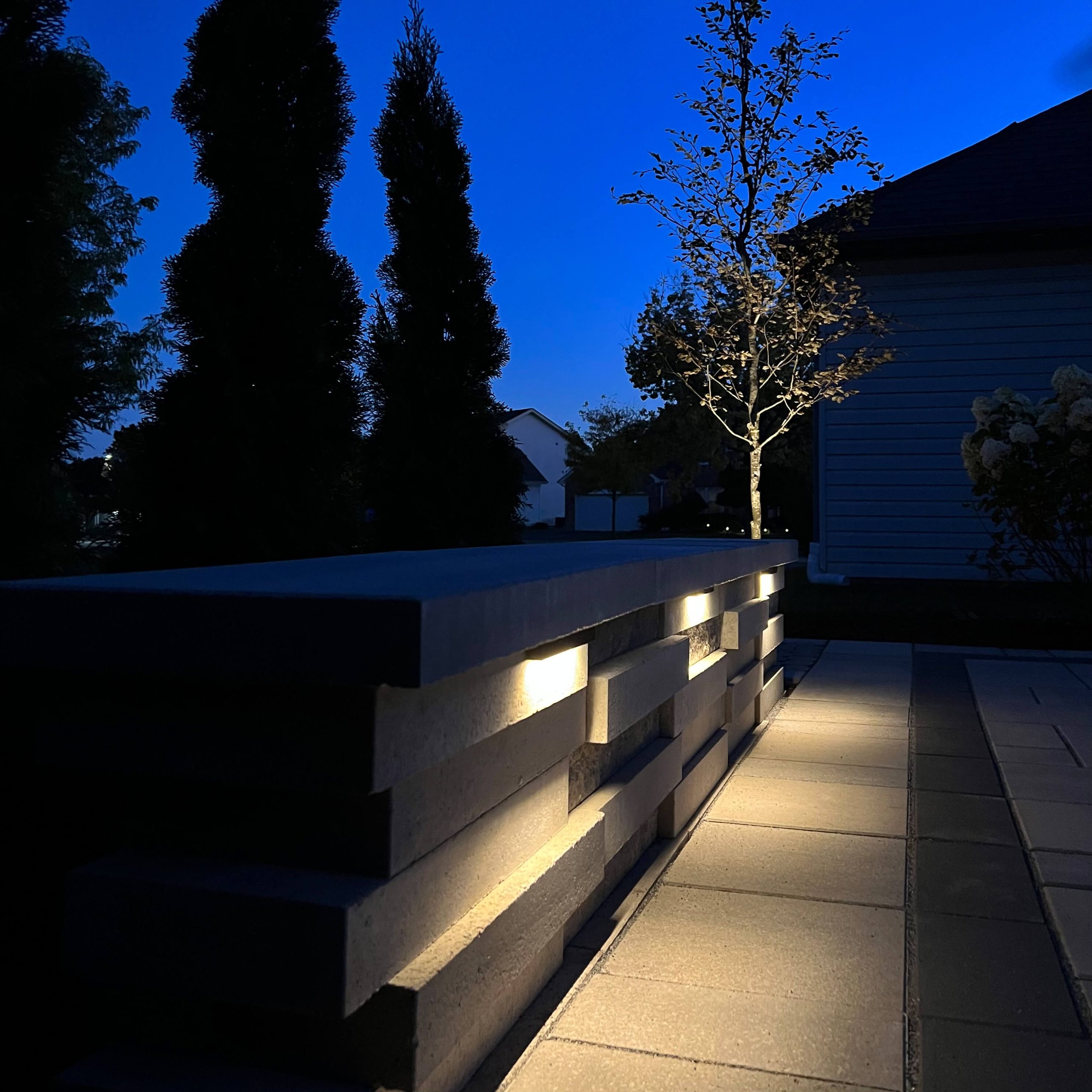
A premium patio installation is not defined solely by an attractive paver collection or complicated pattern. The excavation, subgrade preparation, aggregate, compaction, bedding layer, drainage, edge restraint, and joints all contribute to how the finished surface performs. Many of those decisions disappear permanently from view once construction is complete.
Luxterra Outdoors approaches paver patios as part of a complete landscape system, accounting for the site as well as the finished design. If you’re planning a patio in Naperville or the surrounding Chicagoland area and need a landscape designer, contact Luxterra Outdoors to discuss a design and installation approach built around your property and long-term plans.
Frequently Asked Questions
Can you fix sunken pavers without replacing the entire patio?
Sometimes, especially when settlement is confined to a small area and you can correct the underlying cause. A larger or recurring problem may require rebuilding more of the supporting layers rather than repeatedly resetting the surface.
Is sand enough for a paver patio base?
Bedding sand should not be the first option for Midwest contractors. Instead, they should lean more toward installing an open-grade system for the paver base, which calls for limestone chips as the bedding layer.
Does polymeric sand stop pavers from sinking?
No, polymeric sand primarily stabilizes the joints between paving units rather than supporting the patio from underneath. Sinking usually requires evaluating the base, soil, drainage, or another structural condition below the affected area.
Continue Comparing Your Patio Options
Proper construction determines how a patio performs, but the surface material still affects its appearance, maintenance, design flexibility, and character. Those differences matter most when the patio is meant to anchor a larger outdoor living space.
Next, read “Natural Stone vs Pavers vs Flagstone: Which Patio Material Is Right for You?” for an honest comparison of the major options and where each material makes the most sense.