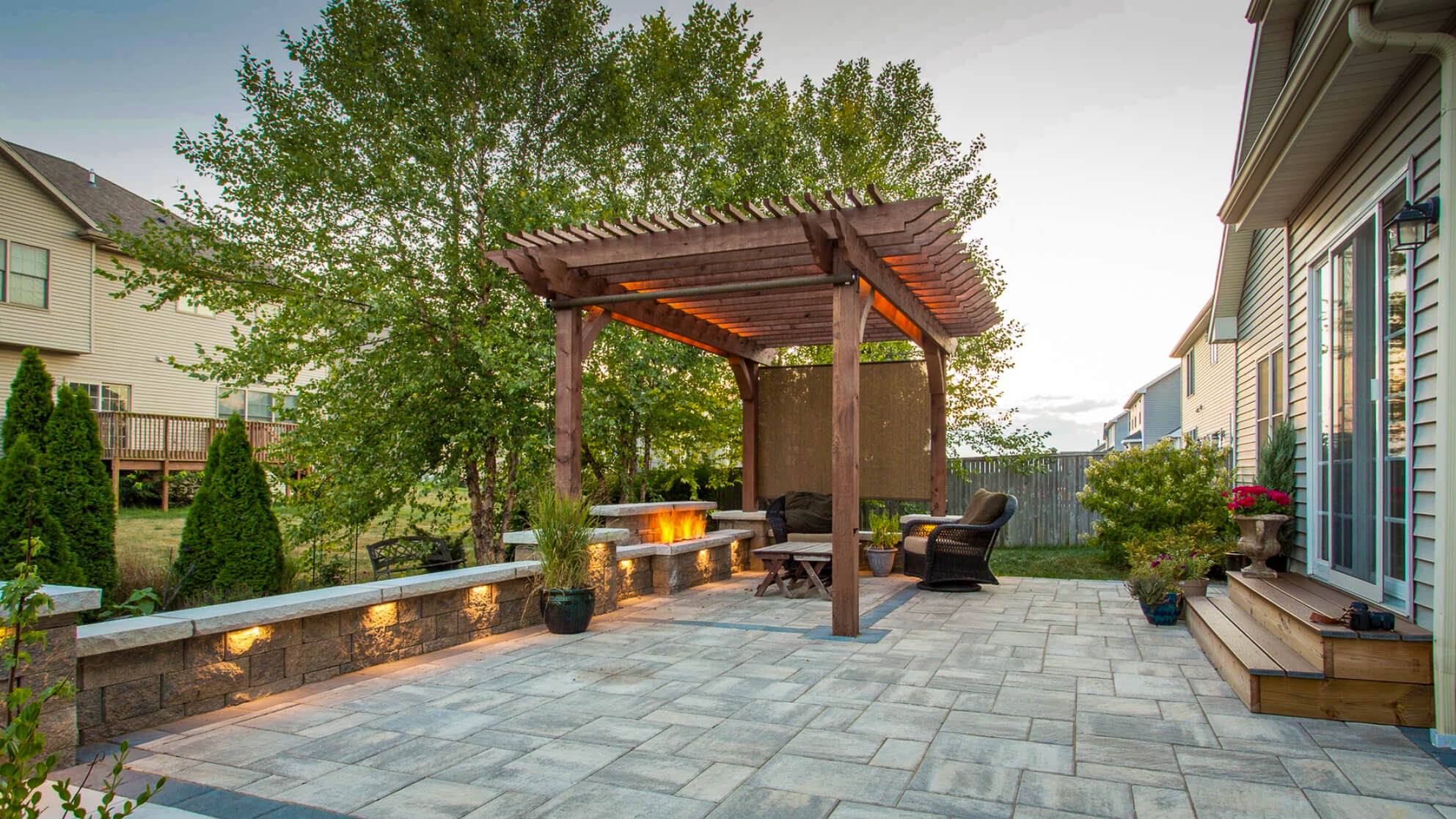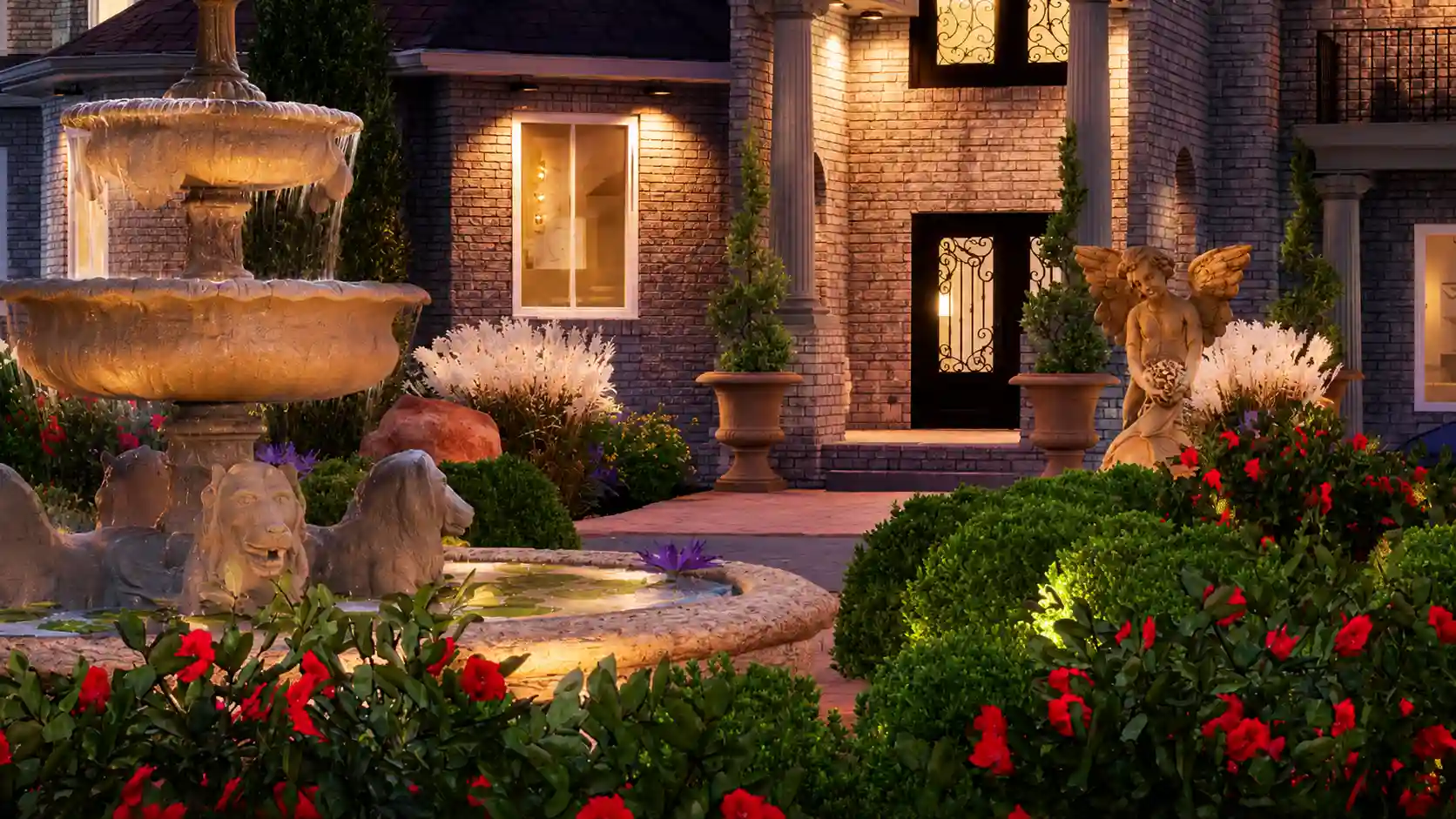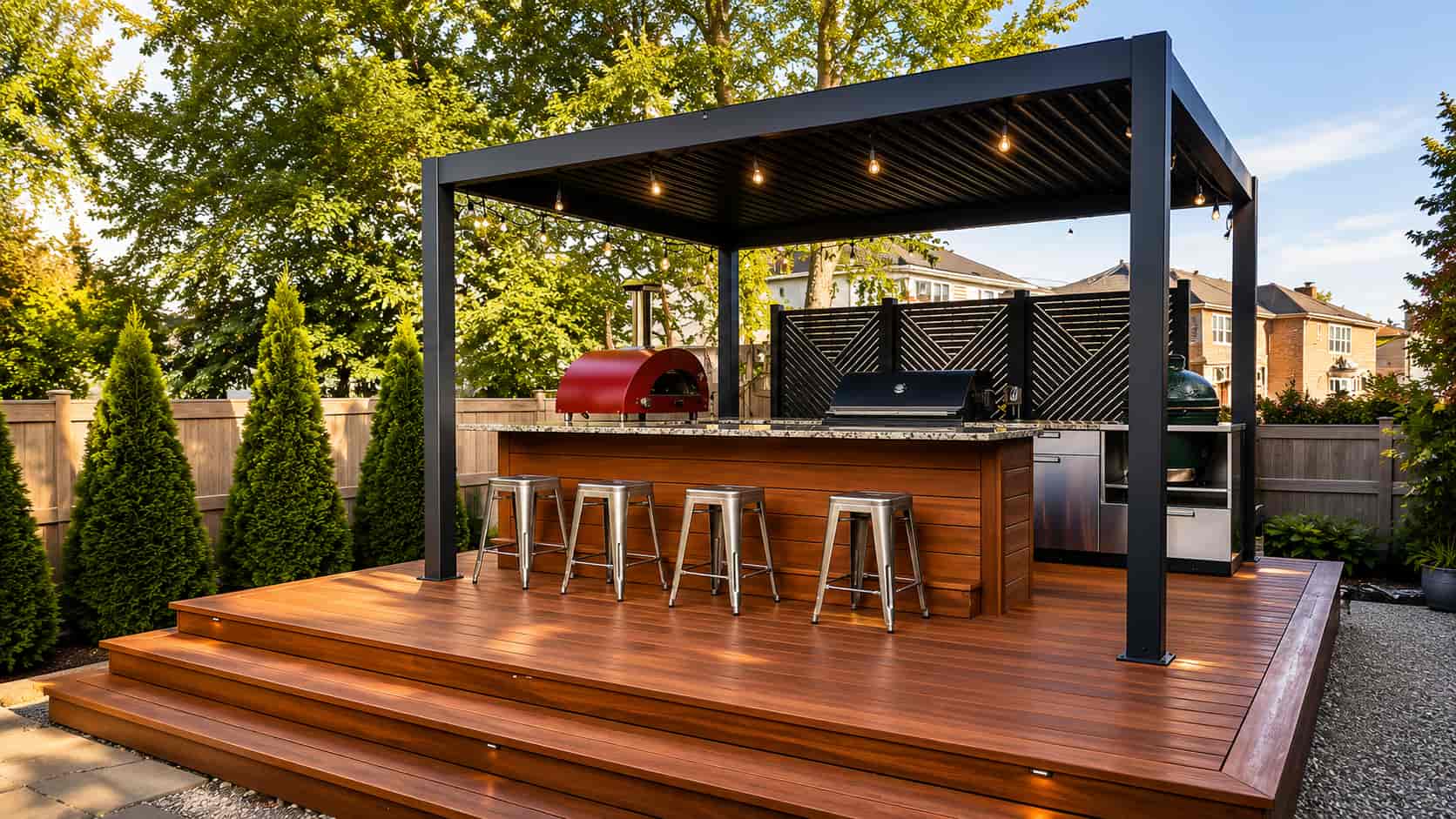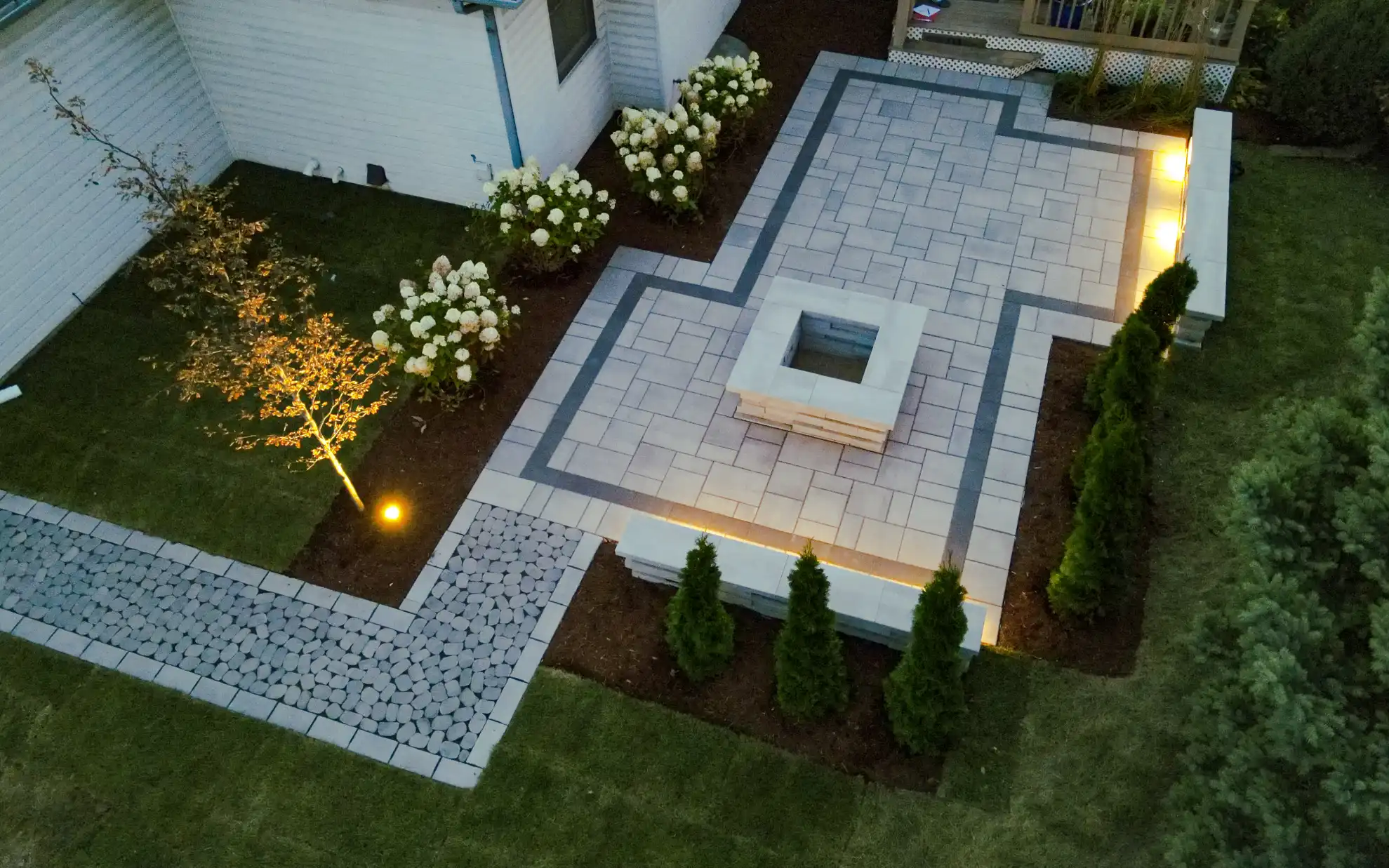
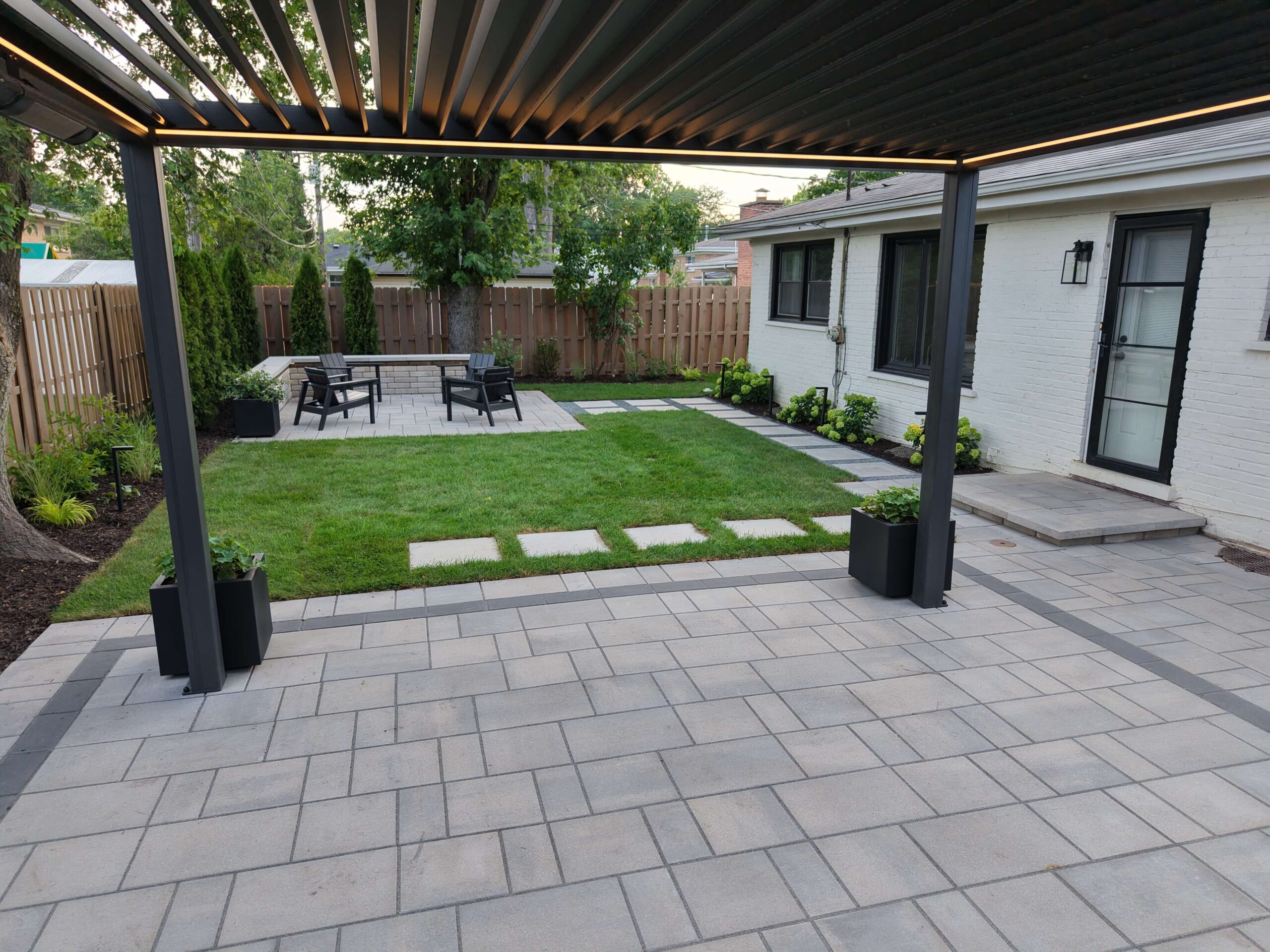
A professionally designed paver patio can turn an underused backyard into a space for outdoor dining, entertaining, relaxing, and spending more time outside during Chicagoland’s warmer months. But before choosing pavers or planning the layout, you usually have one practical question: What should the project cost?
Paver patio costs in Chicago vary considerably because square footage is only one part of the equation. Material selection, excavation, access, drainage, base preparation, layout, elevation changes, and integrated outdoor features all influence the final investment.
At Luxterra Outdoors, patio planning begins with the entire outdoor environment rather than treating the paved surface as an isolated feature. Understanding what goes into the price makes it easier to establish a realistic budget and decide where investing more will have the greatest effect on the finished space.
How Much Does a Paver Patio Cost in Chicago and the Surrounding Suburbs?
Published 2026 estimates vary widely, with basic installations starting much lower than custom projects using premium materials and more extensive site preparation. For a professionally designed patio, paver patio cost per square foot is best used as an initial budgeting tool rather than a final quote.
Using a broad $25 to $55 per-square-foot planning range, common patio sizes could look like this:
| Patio Size Square | Footage Illustrative | Installed Range* |
| 10 x 10 | 100 sq. ft. | $2,500–$5,500 |
| 12 x 12 | 144 sq. ft. | $3,600–$7,920 |
| 12 x 20 | 240 sq. ft. | $6,000–$13,200 |
| 16 x 20 | 320 sq. ft | $8,000–$17,600 |
| 20 x 20 | 400 sq. ft. | $10,000–$22,000 |
*These figures are planning examples based on published pricing, not Luxterra Outdoors quotes. Materials, site conditions, access, and design complexity can move actual costs outside these ranges.
Paver patio cost by size only provides a starting point. Two patios with identical square footage can cost very different amounts once you factor in excavation, materials, drainage, access, and design details.
What Actually Determines Paver Patio Installation Cost?
Square footage affects material and labor quantities, but a professional estimate considers what happens before, during, and around the installation. Some of the biggest cost differences aren’t visible once the patio is finished.
Site Preparation and Excavation
The existing yard matters. Removing an old patio, working around mature landscaping, correcting elevation problems, or moving excavated material through restricted access can increase labor and equipment requirements.
The installation also needs an appropriate foundation beneath the finished surface. Excavation, base materials, and compaction may not look as good as the pavers themselves, but cutting these parts of the scope just to lower the initial price can undermine the value of everything installed above them.
Chicagoland’s seasonal conditions make the underlying construction particularly important. Water, soil movement, and repeated freezing and thawing all have to be considered when planning the patio and surrounding drainage.
Drainage and Grading
A patio has to do more than look level. Its elevations need to work with the house, lawn, planting areas, and other hardscape so water has somewhere appropriate to go.
A site that requires substantial grading or drainage work will naturally have a different cost structure from a straightforward installation. Those costs are serving a purpose, however: the patio needs to become part of the property’s overall water-management strategy rather than creating a new place for runoff to collect.
Access to the Backyard
Two nearly identical designs can require different amounts of labor simply because of access.
Wide access may let crews move excavation and aggregate efficiently with equipment. A fenced or tightly configured property may require smaller machinery, more hand labor, or additional material handling. Existing trees, pools, retaining walls, and neighboring structures can further restrict how crews reach the work area.
This is one reason an accurate paver patio installation cost generally requires more than multiplying the proposed dimensions by an advertised square-foot price.
Why Do Premium Pavers Cost More?
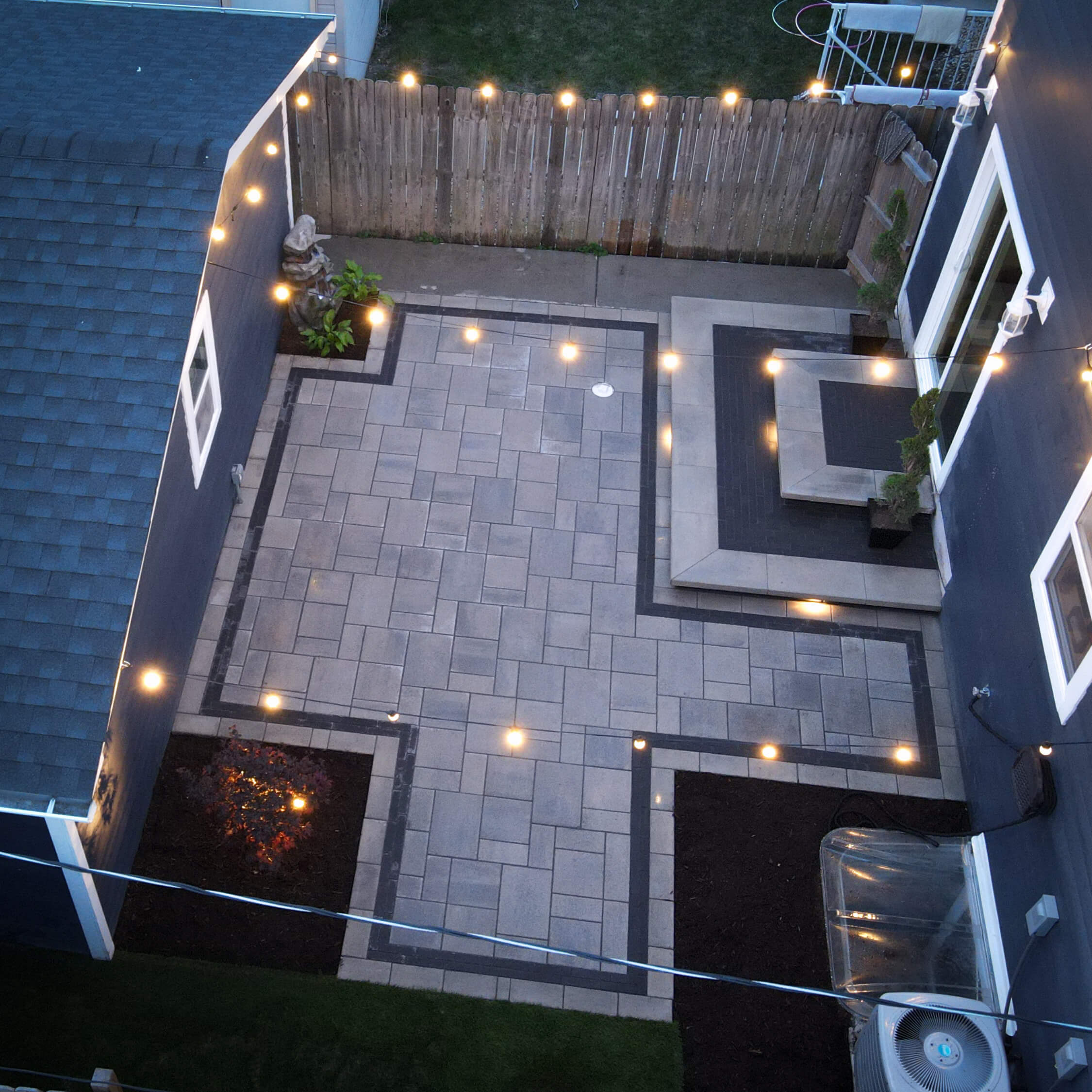
“Paver” describes a broad product category, not a single material at a single price.
Differences can include dimensions, thickness, finish, texture, color variation, manufacturing method, and the collection itself. Larger-format units and products designed to reproduce the character of natural stone may also occupy a different price category than basic concrete paving units. Some popular brands include Menard and Techno Bloc.
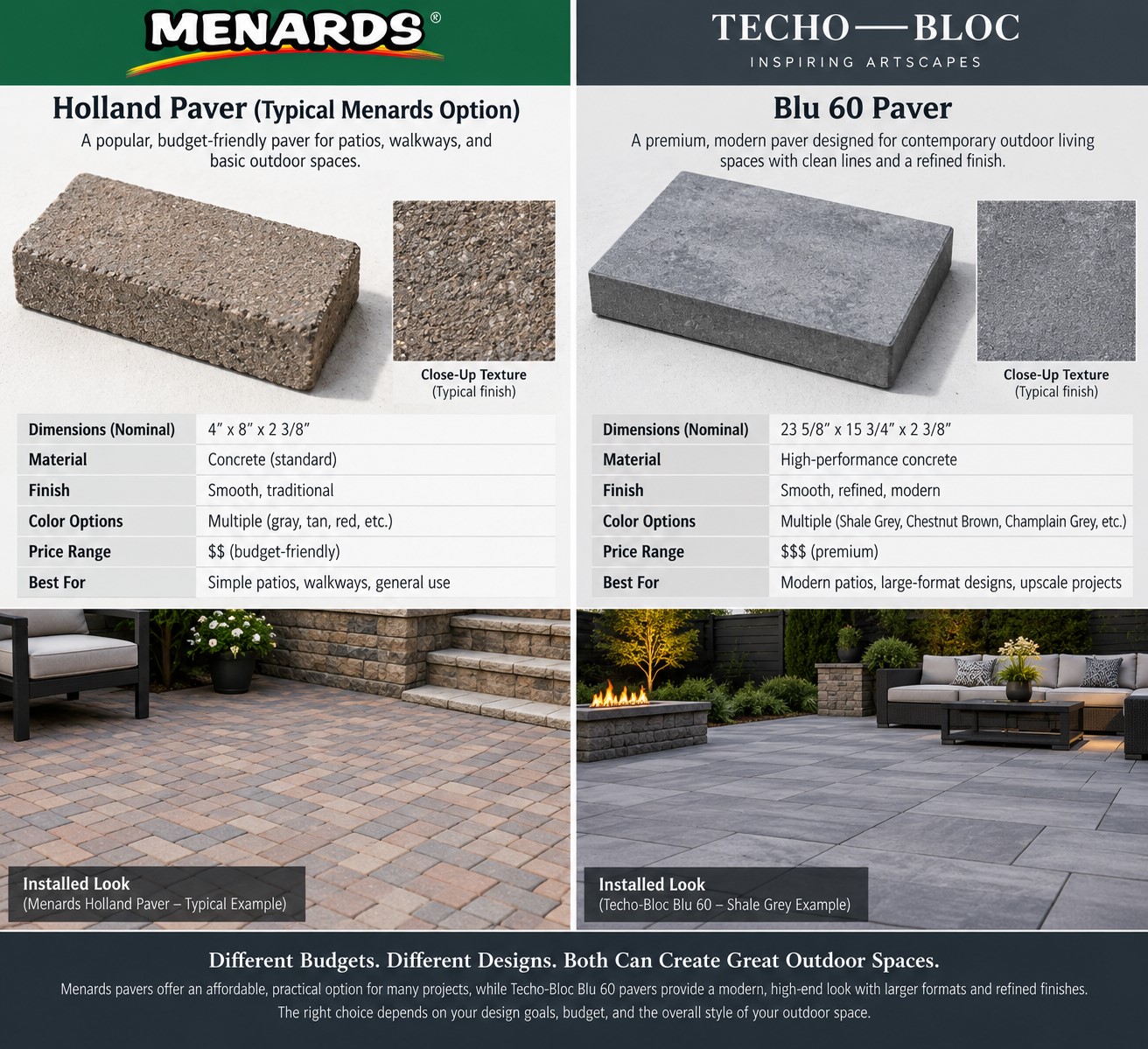
A simple field using one size and straightforward pattern generally requires less cutting and detailing than a layout combining multiple sizes, contrasting borders, inlays, or carefully aligned transitions. Curved edges and complex geometry can also increase cutting and installation time.
Premium materials make the most sense when their added cost contributes to the overall landscape design, rather than when you choose them simply because they are expensive. The paver should complement the house’s architecture, adjacent materials, and other outdoor features.
Patio Size Should Follow How You Plan to Use the Space
Cost-per-square-foot searches often begin with standard dimensions: “How much does a 10×10 paver patio cost?” or “What does a 20×20 patio cost?”
Those are useful budgeting questions, but starting with dimensions alone can lead to a patio that looks affordable on paper but feels frustrating in practice.
A 10×10 Patio
At 100 square feet, a 10×10 patio can work for a compact seating arrangement or a focused secondary space. However, once you account for furniture, circulation, and clearances, the usable area disappears quickly.
If the goal is simply to create a small place to sit outside, that may be completely appropriate. It is less likely to comfortably accommodate several distinct activities.
A 12×20 or 16×20 Patio
Moving into the 240- to 320-square-foot range creates more flexibility. Depending on the furniture and layout, you may have room to create dining and lounge functions without forcing every chair and table into the same zone.
This is also where planning circulation becomes increasingly important. The patio should make it easy to move between the house, yard, and different seating areas rather than simply maximizing paved square footage.
A 20×20 Patio
At 400 square feet, a patio can support a more substantial outdoor living program. With careful planning, dining, conversation seating, or another defined activity can coexist within the same design.
Still, bigger isn’t automatically better. An oversized patio without appropriate scale, planting, or visual structure can feel like an expanse of paving rather than an extension of the landscape.
The better question is not simply “How large a patio can I afford?” It is “How much space does the way I want to live outside actually require?”
Features That Can Increase the Cost of a Custom Patio
A patio frequently becomes the foundation for a larger outdoor living environment. Once other features enter the design, a basic square-foot patio price no longer accurately reflects the project.
Common additions include:
- Outdoor kitchens and built-in grilling areas
- Fire pits and outdoor fireplaces
- Seat walls and retaining walls
- Pergolas, pavilions, and other shade structures
- Landscape and hardscape lighting
- Steps and elevation transitions
- Drainage improvements
- Planting beds integrated into the patio layout
- Water features
- Utility connections for gas, electric, or water
Planning these components together can be especially valuable even when they won’t all be constructed immediately. A future kitchen, for example, may affect utility planning and patio layout today.
There can also be permitting implications. In Naperville, a new or expanded patio requires a permit when the resulting paved area exceeds 500 square feet. A patio of any size requires one if it includes certain permanent features such as a fire pit, fireplace, or grill; rises more than 30 inches above adjacent grade; or incorporates electrical, plumbing, or gas fixtures. Setback and easement requirements still apply even when the patio doesn’t require a permit.
What Are You Really Paying for With a Premium Patio Installation?
Two patios with the same square footage can have very different scopes. Beyond the visible pavers, pricing may include design, excavation, disposal, base preparation, compaction, drainage, grading, edge details, and surrounding restoration.
A lower estimate may reflect simpler materials or an easier site, but it may also include less work beneath the surface. When comparing proposals, look at what each contractor is actually building rather than comparing the final price alone.
How Long Do Paver Patios Last?
Exactly how long paver patios last depends on the material, installation quality, site conditions, and maintenance. A major advantage of pavers is their repairability, since crews can often remove and reinstall individual units when localized problems occur.
For Chicagoland properties, proper site preparation and construction are especially important to long-term performance. Joint maintenance and occasional repairs may still be necessary, but a quality install is a long-term outdoor improvement.
Does a Paver Patio Add Value?
Two kinds of value are worth considering: resale value and use value.
A well-designed outdoor living space can make a property more appealing, but homeowners should be cautious about treating any patio as an investment with a guaranteed financial return. Resale results depend on the property, neighborhood, project quality, market conditions, and what future buyers value.
Use value is easier to understand.
If the patio makes it comfortable to eat dinner outside, host friends, gather around a fire, relax after work, or simply spend more time in the backyard, the improvement provides value throughout ownership. A thoughtfully designed space may also resolve practical shortcomings such as poor circulation, inadequate seating space, or a backyard that previously had no clear destination.
For that reason, ROI shouldn’t be reduced to a single percentage. A patio is part property improvement and part lifestyle investment.
Think Beyond the Initial Patio Price
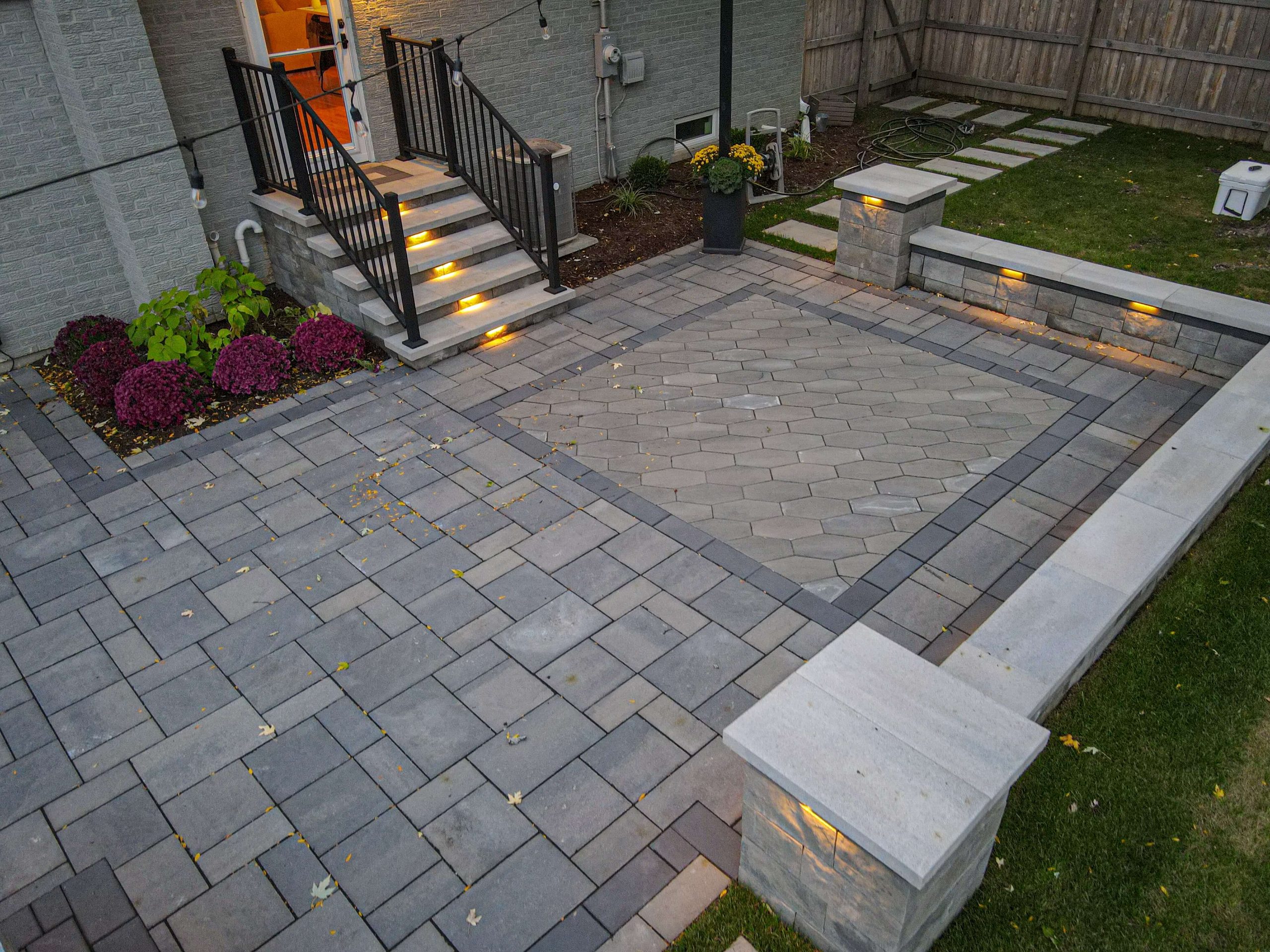
The best way to evaluate paver patio cost in Chicagoland is to look beyond the price per finished square foot. A properly built, thoughtfully designed patio should account for the foundation beneath the pavers, how the space connects with the rest of the property, and how well the layout supports the way you plan to use your backyard.
Luxterra Outdoors designs outdoor environments around each property, its architecture, and the client’s goals for the space. If you’re considering a paver patio in Naperville or the surrounding Chicagoland suburbs and need a landscape designer, contact Luxterra Outdoors to discuss your project, design goals, and investment range.
Frequently Asked Questions
How much does a 20×20 paver patio cost in Chicagoland?
A 20×20 patio contains 400 square feet. Using an illustrative Chicagoland range of $25 to $55 per square foot, a straightforward estimate is about $10,000 to $22,000. However, materials, access, site preparation, and design features can push the actual project outside that range.
Are expensive pavers always better?
Not necessarily. A premium paver may offer a particular finish, scale, texture, or aesthetic that better suits the design, but proper installation and selecting the right material for the application matter more than price alone.
Is a paver patio worth the investment?
It can be when the patio is appropriately designed, properly installed, and genuinely improves how the outdoor space functions. Consider its value in both potential property appeal and the years of everyday use it can provide.
Continue Learning About Paver Patio Construction
Cost is only one part of a patio investment. What happens beneath the finished surface strongly influences how the patio performs over time.
Continue with “Why Paver Patios Sink (and What Proper Base Prep Prevents)” to learn why excavation, base materials, compaction, and drainage deserve just as much attention as the pavers you see.