Naperville’s outdoor season runs on a clock most homeowners never think about until they’re standing in a half-finished yard as October closes in. According to the National Weather Service, the average frost-free window in this area stretches from April 21 to October 19, just 181 days of weather reliable enough to pour concrete, set stone, and let new plantings take hold before winter arrives again.
That’s the entire calendar most Naperville and Chicago-area homeowners have to work with each year, which is exactly why choosing to phase a backyard renovation over multiple seasons has become the smarter approach for anyone who wants a finished, cohesive space without cramming every feature into one frantic summer.
A phased renovation isn’t a fallback for a tighter budget. It’s a strategy that lets each stage earn its place in the yard, prove itself through a full season of use, and set up whatever comes next, rather than forcing every feature to compete for the same few months of buildable weather.
What Should You Build First to Avoid Wasting Money Later?
The order in which you build matters as much as what you build. Homeowners who start with the highest-impact, most personal feature, like an outdoor kitchen, before the ground beneath it has a solid structure often end up paying to redo the work a year or two later, once the rest of the yard catches up to that first investment.
Starting with hardscaping and pavers solves this. A well-graded patio, walkway system, or paver base provides a stable foundation for every later phase, from a pergola to a full kitchen, that doesn’t need to be torn up or replaced. It also settles the drainage and grading questions early, before a fire feature or water feature gets planned into a spot that turns out to hold water after a spring rain.
How Do You Create a Phased Master Plan That Still Feels Cohesive?
The biggest risk of building over several seasons isn’t the wait; it’s ending up with a yard that reads like a collection of separate purchases rather than a single connected design. A patio that doesn’t line up with where a kitchen will eventually go, or a lighting plan added as an afterthought, is a sign of a project that was never mapped out as a whole.
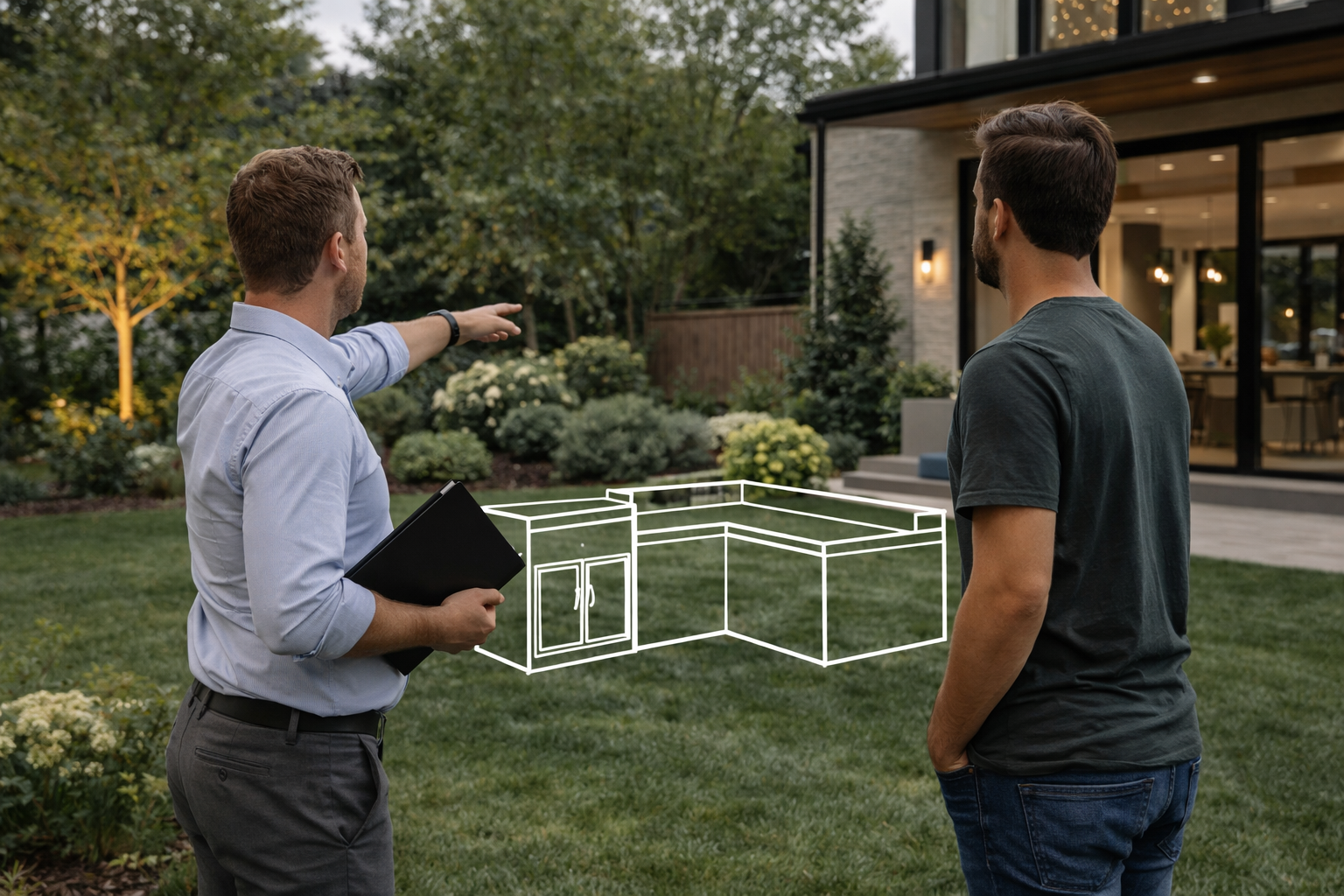
That’s why every phased project starts with a full 3D landscape design, even when construction spans two or three years. Seeing the complete plan first, from utilities and grading to hardscape and plantings, means each phase gets built to fit a finished picture rather than guessed at in isolation. Homeowners can build phase one this year and phase three two years later and still end up with a yard that looks like it was designed all at once.
Phase 1 Ideas for Immediate Impact
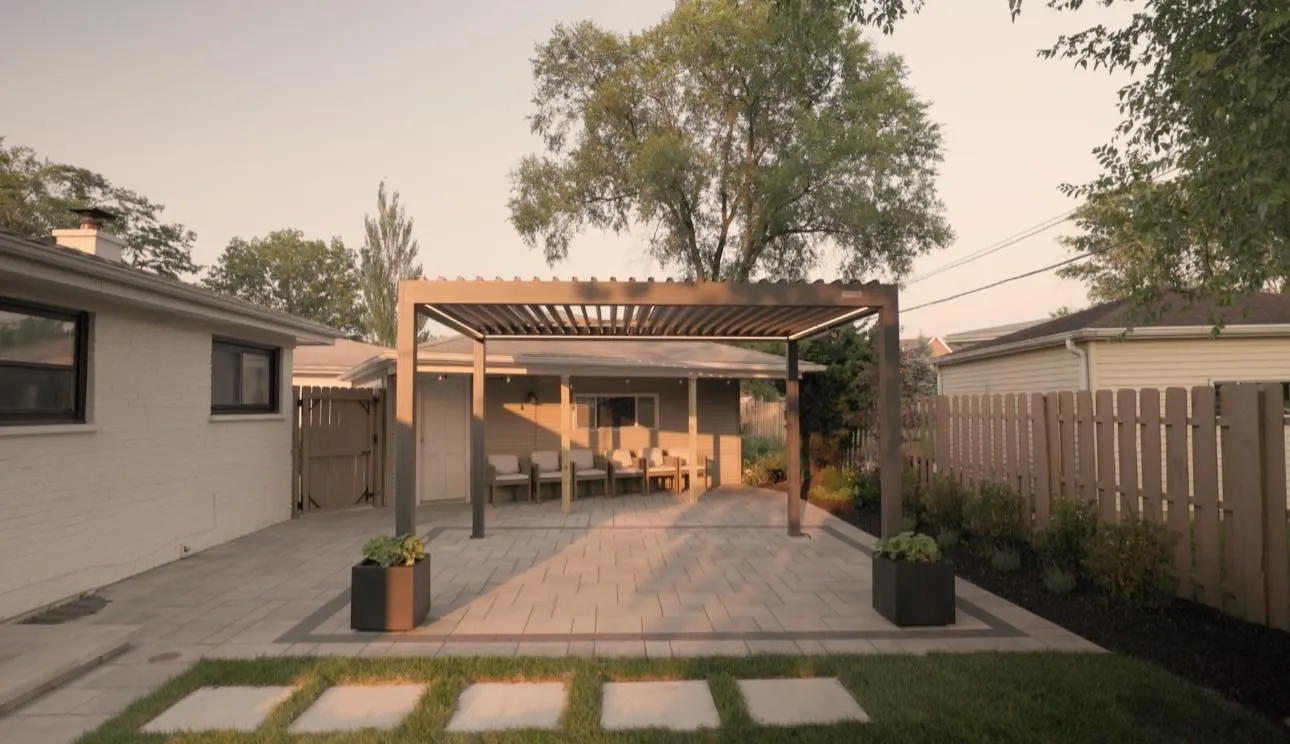
The first phase should deliver a visible, livable change without creating rework down the line. A shade structure is one of the highest-value early additions, since a pergola or louvered roof extends the number of hours a day the yard is usable without requiring the drainage or utility planning that later features need.
Pairing a shade structure with artificial turf installation rounds out a strong first phase. Turf gives the yard an immediately finished, green look, without the seasonal patchiness that natural grass shows through a Chicago-area freeze-thaw winter, and it won’t need to be dug up or worked around when later phases bring in a kitchen or water feature.
Phase 2 Upgrades That Extend the Season
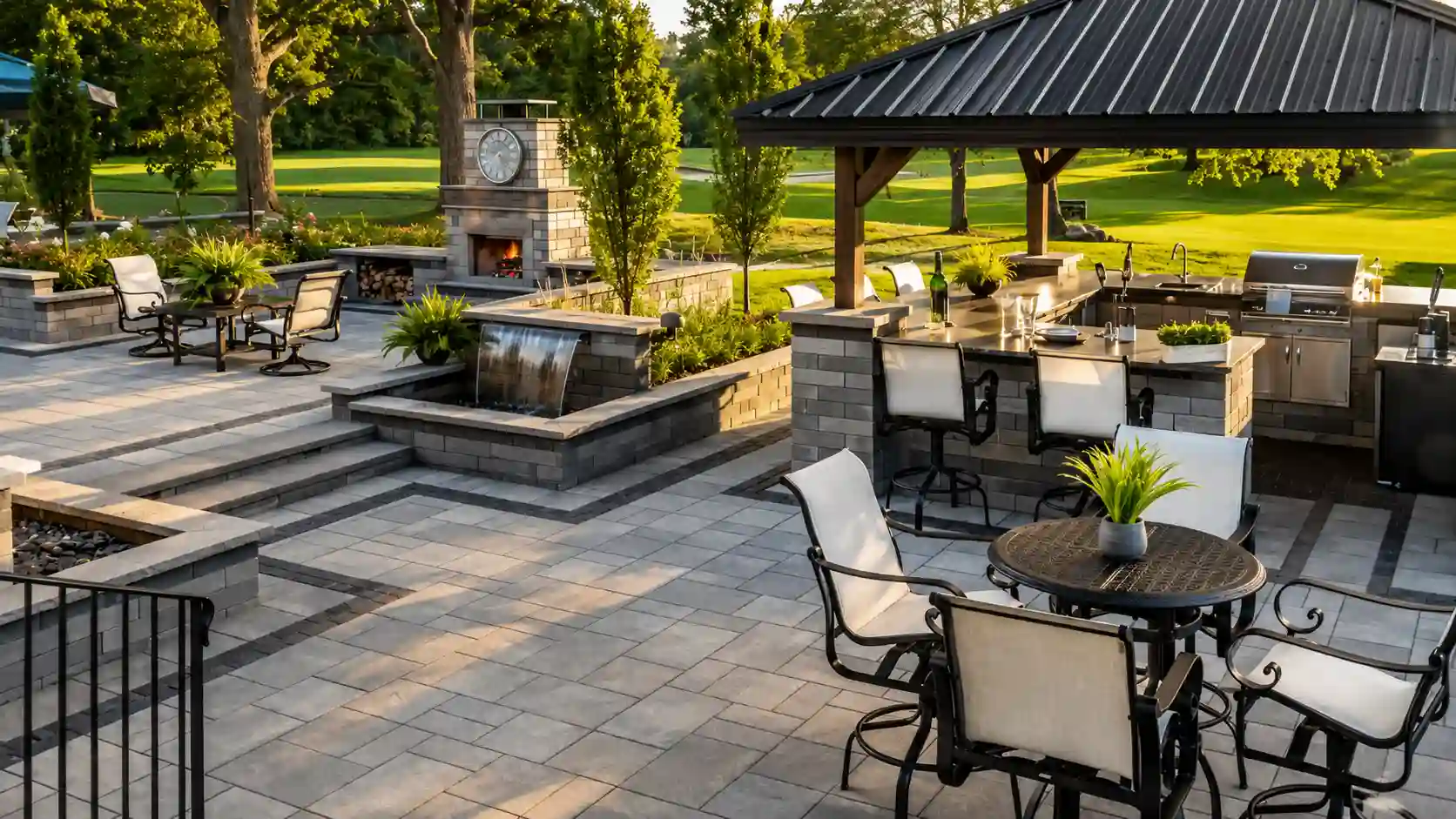
Once the hardscape and first-phase features are in place, phase two is where a yard starts stretching its usable calendar. Outdoor fire features are the clearest example: a fire pit or fireplace built on top of an already-graded patio lets a family use their yard on a cool spring evening or a crisp fall night, not just during the handful of peak summer weeks.
Because the hardscape base and master plan already account for where a fire feature will sit, this phase installs cleanly, without cutting into a patio finished a year earlier or rerouting a gas line that should have been planned from the start.
Phase 3 Builds for Full Outdoor Living
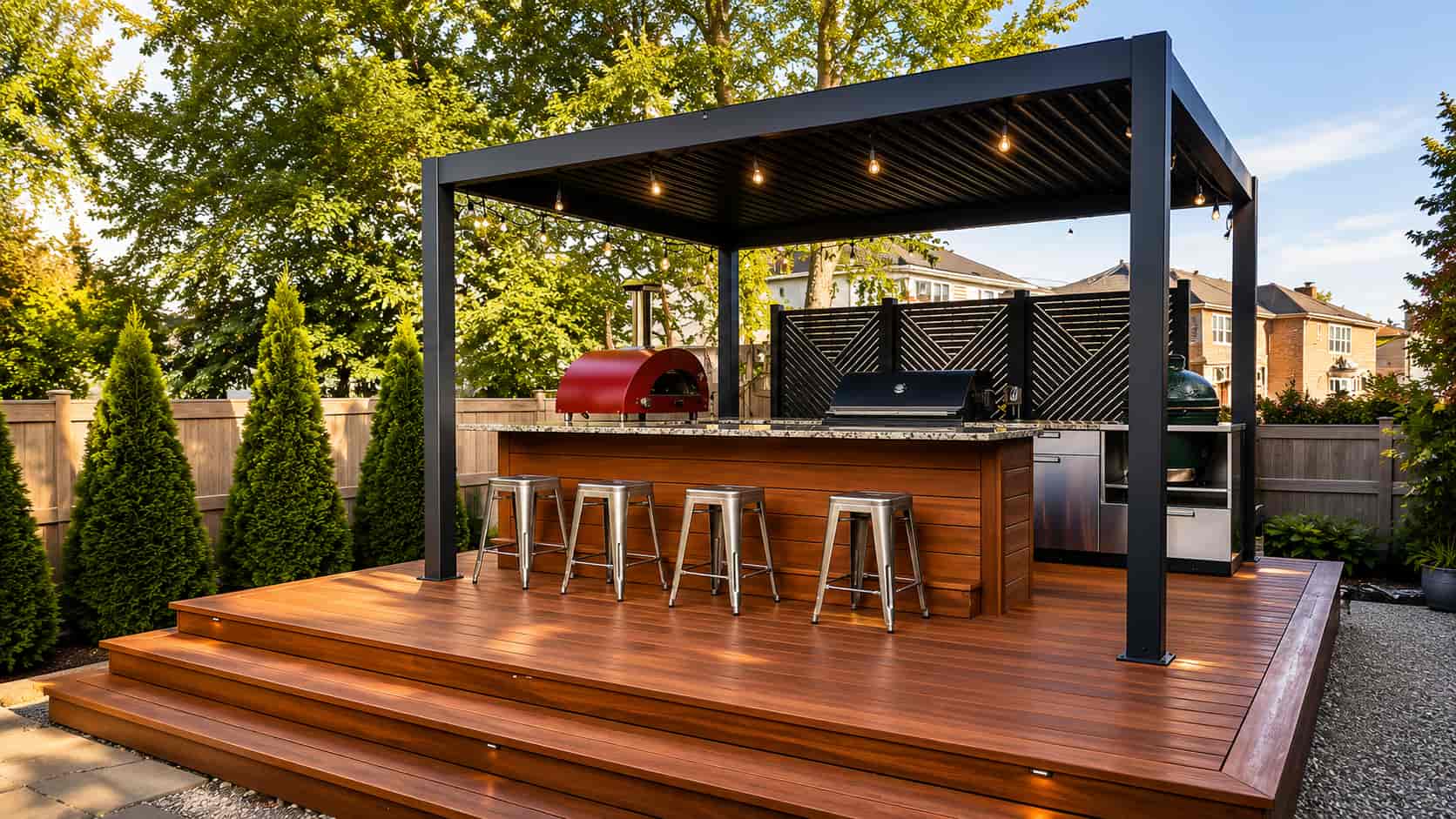
The final phase is where the investment becomes a genuine second living space. An outdoor kitchen turns the yard into a real entertaining destination, and because gas and electrical rough-in were part of the original 3D plan, adding it now doesn’t mean opening up a finished patio to run new lines.
A water feature is a natural finishing touch at this stage, whether it’s a wall fountain that anchors a dining area or a pondless waterfall tucked into a planting bed. Saved for last, it becomes the detail that signals the whole project is complete, rather than a piece installed early and later built around.
Naperville’s Partner for Backyard Renovations Built in Stages
Luxterra Outdoors designs and builds phased backyard renovations for homeowners across Naperville and the greater Chicago suburbs, with the same design-build team carrying a project from the first 3D plan through the final phase, however many seasons that takes. Our reviews across Google and Facebook reflect a 5-star average, built by clients who trusted us to plan a multi-year project as carefully as a single-season one.
Because the same team handles design, permitting, and installation at every phase, homeowners never have to re-explain their vision to a new contractor each time they’re ready to build the next piece of the plan.
Frequently Asked Questions
Does phasing a backyard project cost more than doing it all at once?
Not when the sequencing is planned correctly. A full 3D master plan before phase one begins ensures that materials, grading, and utility lines are accounted for from the start, so later phases build on existing work rather than undoing it. Added cost typically comes from skipping that planning step, not from spreading construction across seasons.
What should I build first for a Naperville backyard?
For most Naperville yards, hardscaping and pavers come first because Illinois’ freeze-thaw cycle is unforgiving toward anything installed on unstable ground. Once that base is properly compacted and graded, a shade structure or a stretch of artificial turf are the natural next additions, since they add livability quickly without the utility trenching a kitchen or fire feature requires later.
What time of year is best for each phase?
Hardscaping and grading perform best in spring and early fall, while the ground is workable and materials have enough time to cure before cold weather returns. Features like fire elements, kitchens, and water features can be added later in the season, since they build on hardscape that’s already set, giving homeowners more flexibility in scheduling later phases.
Ready to Map Out Every Phase of Your Backyard?
A backyard built in phases only works when the whole plan exists before phase one begins. Start your phased backyard renovation with a design consultation that maps out every season of the project before the first shovel goes into the ground.