According to a 2026 survey by Clever Offers, 58% of homeowners reported at least one regret about a recent renovation, with overspending ranked first. For outdoor projects, most of those regrets point back to one place: the planning phase was skipped or cut short. In Naperville, the outdoor build season runs roughly from May through October. That window is tight enough that a mid-project pivot costs real time and real money. Homeowners who go in without a complete plan tend to find that decisions free to make on paper become expensive the moment a crew shows up.
What Is the Biggest Mistake Homeowners Make First?
Breaking ground before a full plan exists. Homeowners typically commit to one element, a patio or a deck, without working out how everything else connects to it. Each subsequent addition then requires revisiting work already done, generating costs that sequencing would have prevented.
Timeline underestimation follows closely. Projects in the Chicago suburbs involve permit approvals, contractor scheduling, and weather windows that can stretch a two-week expectation into a two-month reality. Material lead times add to the pressure: specialty pavers, pergola components, and outdoor kitchen fixtures often require six to eight weeks from order to arrival.
Material selection for the region’s climate has to happen early, too. Freeze-thaw cycles crack improperly installed pavers. Some wood species warp or splinter through Naperville winters. The wrong material choice at the start becomes a recurring maintenance burden.
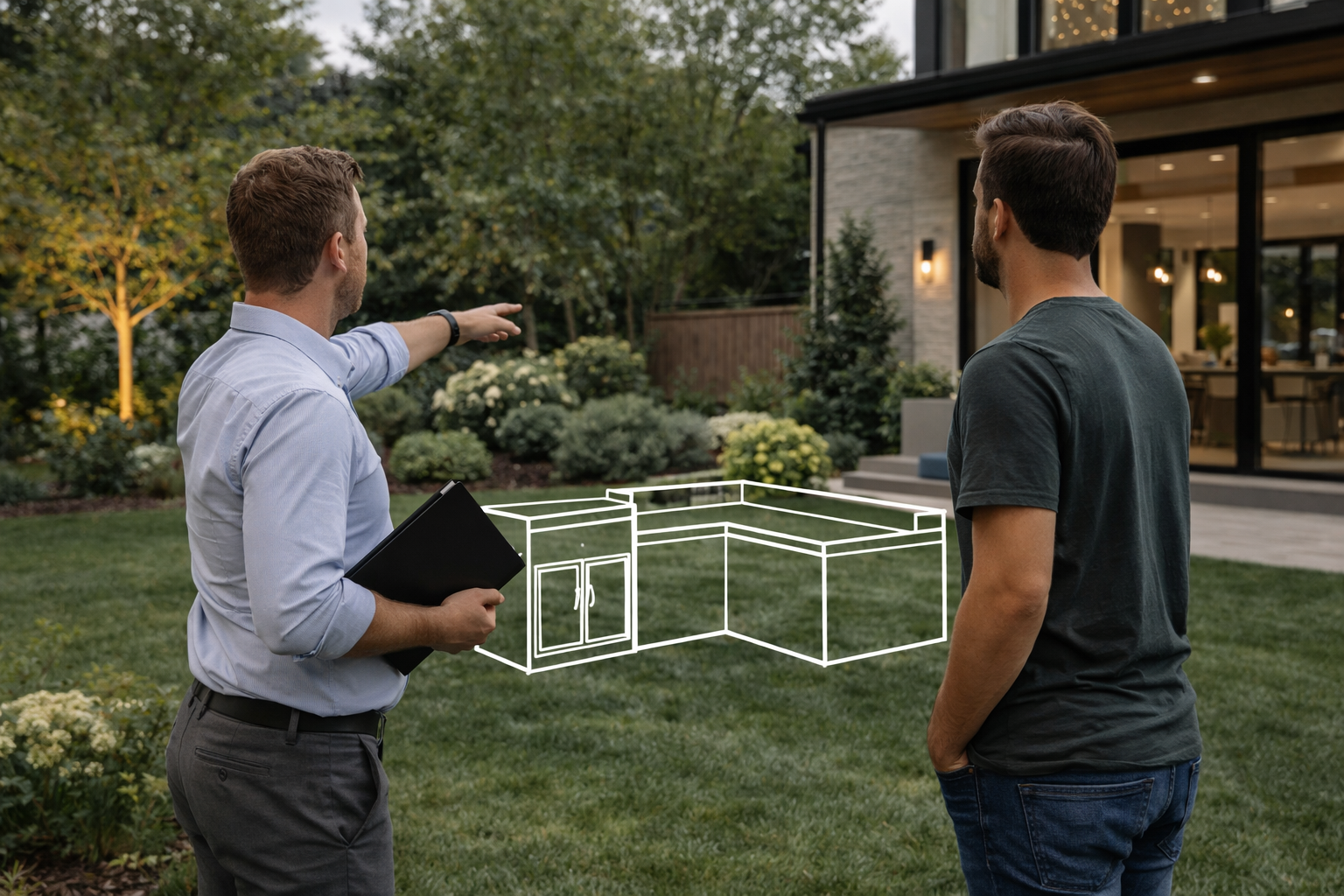
Working through a 3D landscape design before any digging begins gives homeowners a chance to confirm layouts, spot conflicts, and lock in decisions while changes cost nothing.
What Should You Decide Before You Pick Materials?
Before landing on a finish or a paver, there is a more practical question to answer: how will this space actually get used?
Hosting vs. relaxing. A yard built for entertaining needs wide traffic paths, overhead coverage, and a prep or serving area. A yard built for quiet use prioritizes privacy and comfort. Most yards need to handle both, but building without a clear answer to this question produces a space that handles neither particularly well.
Day vs. night use. Lighting gets treated as an afterthought on a consistent basis. Electrical rough-in for fixtures, speakers, and outlets needs to happen before hardscape goes in, not after.
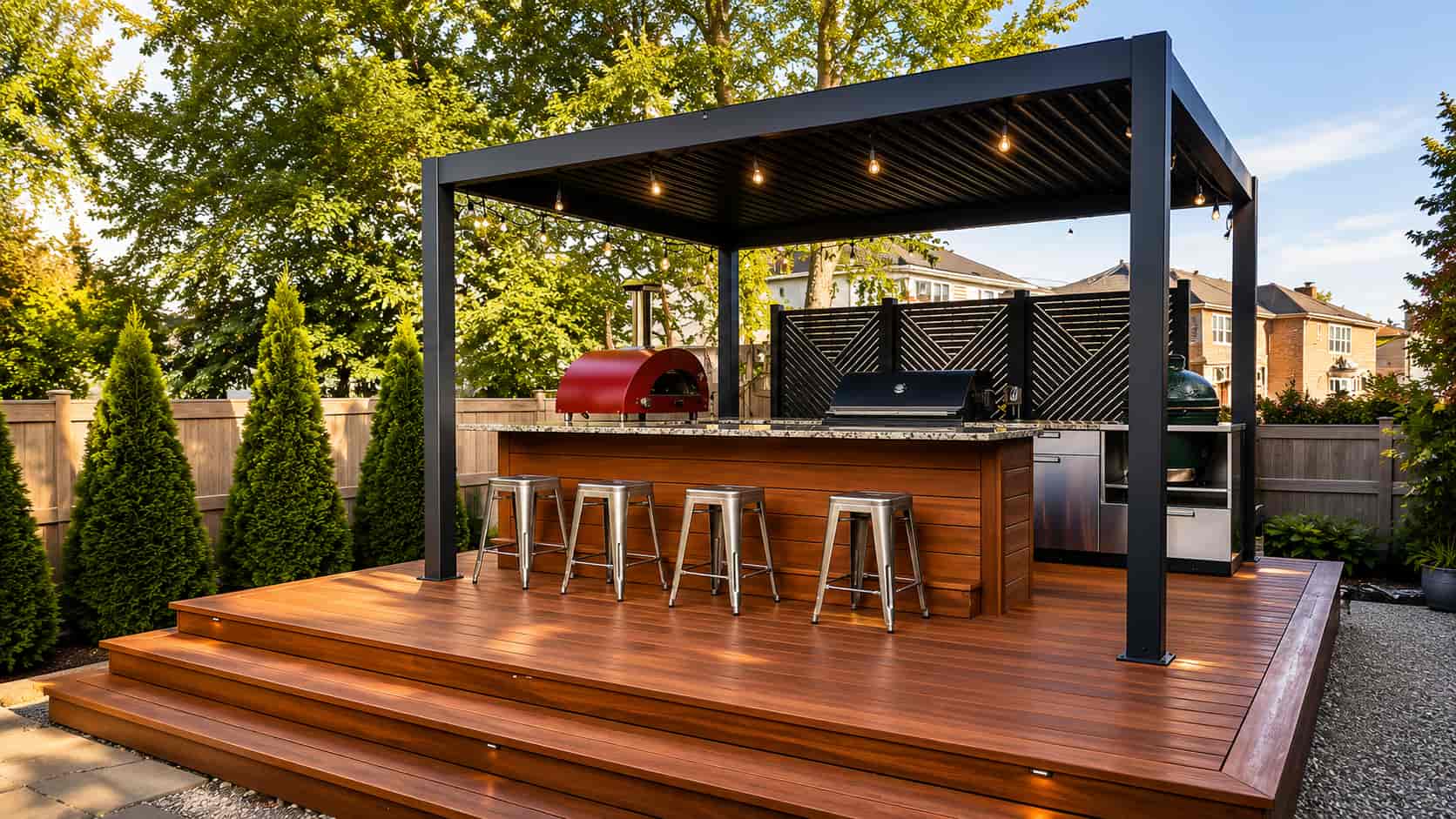
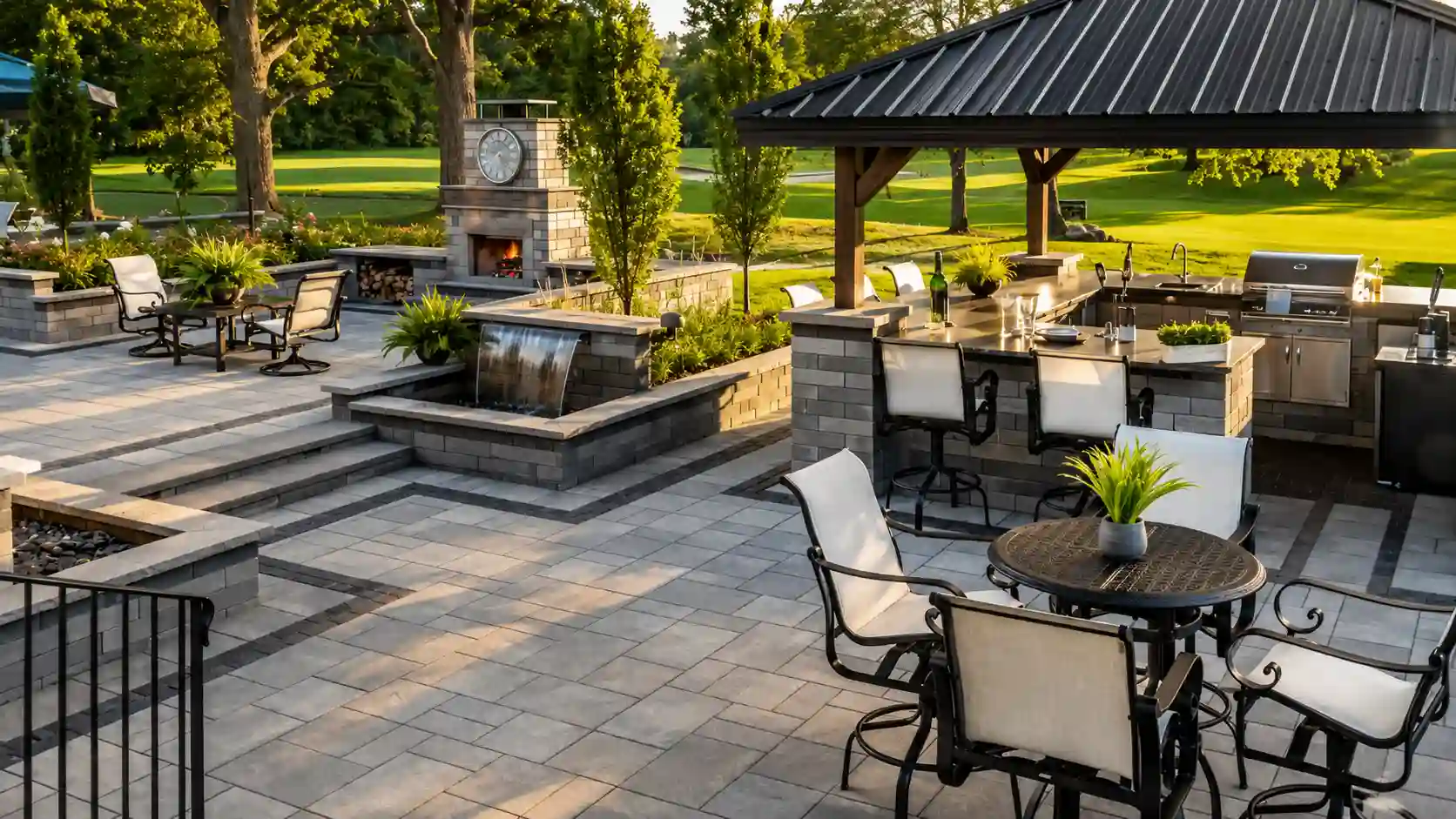
For homeowners who plan to entertain regularly, deciding on the footprint and placement of an outdoor kitchen early reshapes every other layout call. Gas line location, prep surface sizing, and seating arrangement all bear on paver layout and traffic flow at the same time.
What Can Throw Off Your Budget and Timeline?
Utilities and Drainage Surprises
Underground utilities, drainage swales, and downspout extensions stay invisible until excavation starts. A drainage problem that surfaces mid-project adds weeks to the schedule and thousands to the bill. A site assessment before breaking ground catches these issues at the stage when they are still easy to work around.
Material Lead Times
Ordering materials after construction begins is one of the most reliable ways to derail a schedule. The base of any outdoor build, including hardscaping and pavers, needs to be specified and ordered far enough ahead that materials arrive before labor is scheduled.
Change Orders
Every decision made after construction starts costs more than the same decision during planning. Adjusting paver patterns, adding an outlet, or extending a wall mid-build means rescheduling crews and often revisiting work that is already finished. The planning phase is the only point in a project where changes carry no cost.
What Features Do Homeowners Add Too Late?
Fire Features
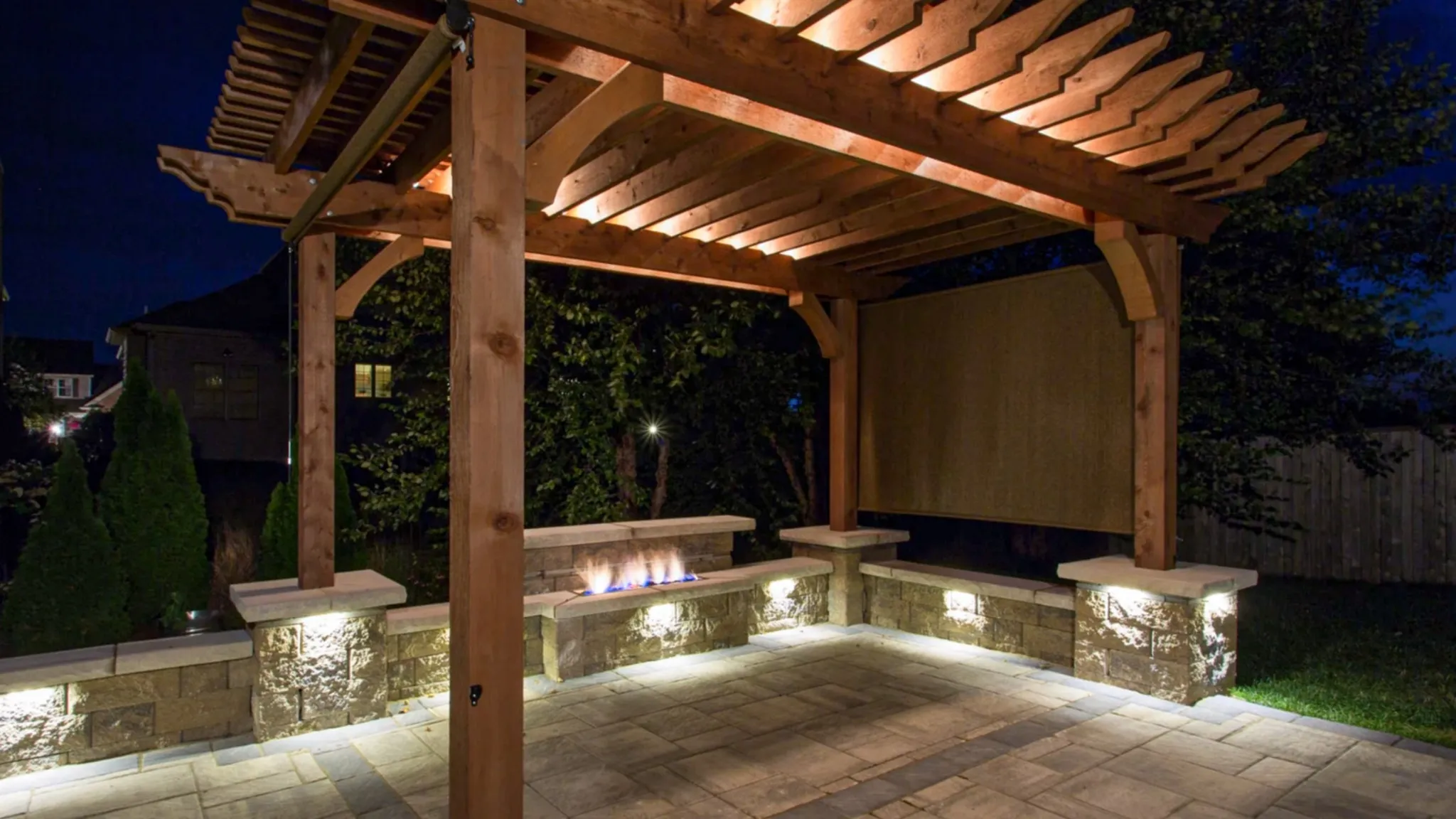
Fire pits and outdoor fireplaces need gas line rough-in or dedicated electrical circuits, and their placement affects sight lines, safety clearances, and furniture arrangement. Retrofitting a fire feature once a patio is set typically requires cutting into finished hardscape. Building outdoor fire features into the original scope produces a result that reads as intentional, not added on.
Shade
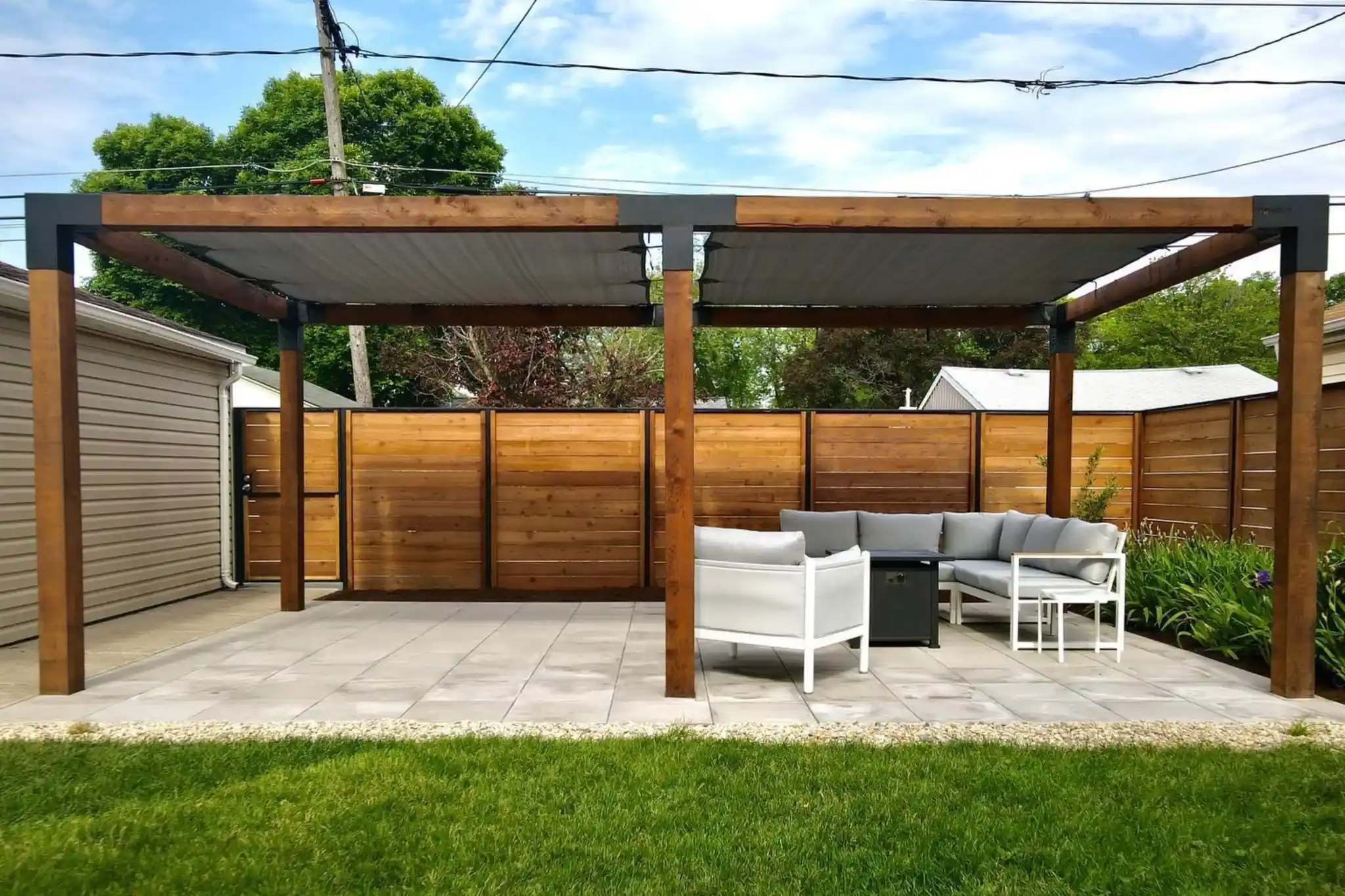
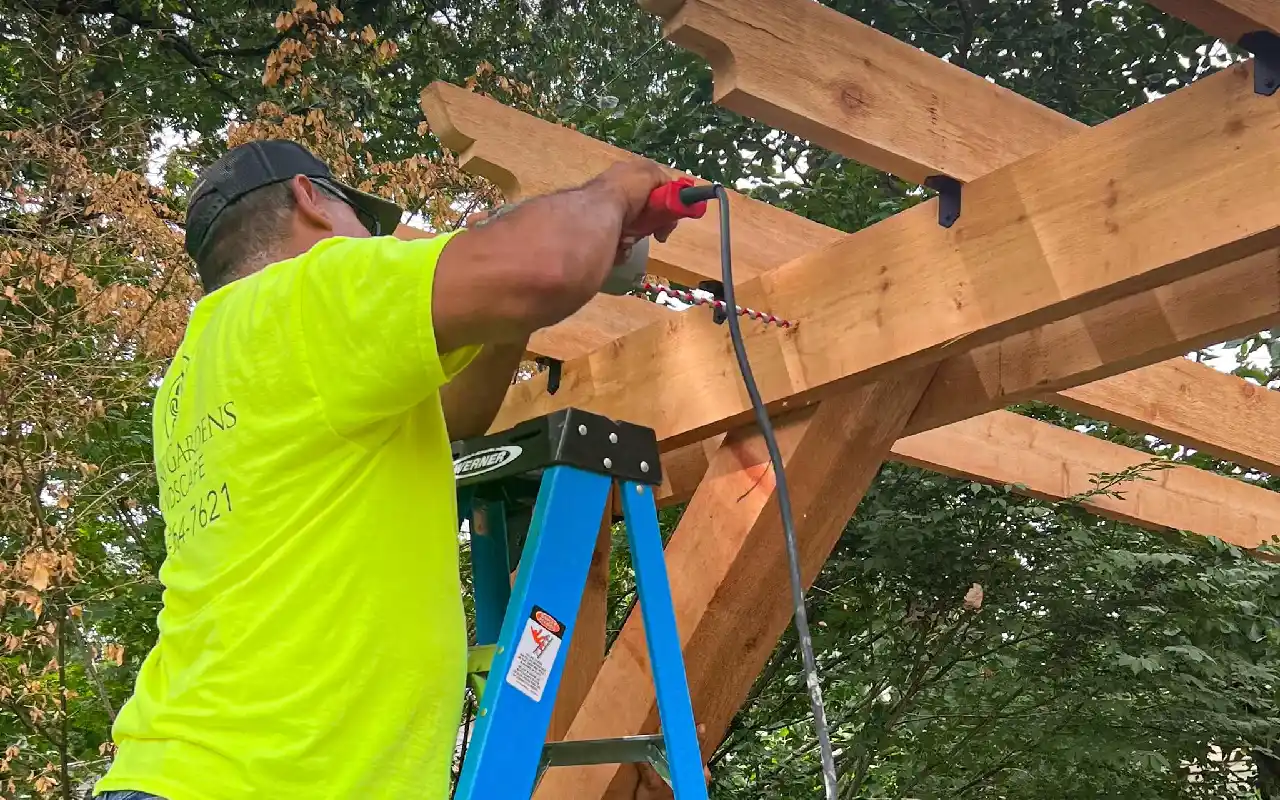
Shade structures need footings or attachment points designed into the hardscape from the start. A pergola added after the fact usually means drilling into finished pavers or pouring new concrete footings next to work that is already complete.
Lighting
Conduit for outdoor lighting should run before hardscape is installed. Adding it afterward means disrupting finished surfaces at significant cost. Path lights, step lights, and anchor points for overhead strands all require placement decisions at the design stage.
Water Features
Water features need both electrical and plumbing rough-in, and their location affects grading and drainage across the entire yard. Adding them as an afterthought limits where they can go and makes the integration obvious.
Frequently Asked Questions
When should I start planning for a spring build in Naperville?
January or February. Design consultations, material selection, and permitting typically take eight to 12 weeks, and contractors with strong local track records book their spring calendars well in advance.
How long does an outdoor living project take?
A patio installation typically runs two to three weeks of active construction. A full backyard remodel with multiple elements, an outdoor kitchen, shade structure, and fire feature, can span six to 10 weeks or more, not counting design and permitting.
What should I do first: patio, kitchen, or landscaping?
Hardscape first. It sets the grade, drainage, and layout that everything else follows. The kitchen is designed into the hardscape plan from day one. Landscaping comes after all construction is finished.
Build It Right the First Time with Luxterra Outdoors
Homeowners who are happiest with their outdoor spaces have one thing in common: the full project was designed before any work started. Luxterra Outdoors works with homeowners throughout Naperville and the surrounding suburbs to put a complete plan together before a single shovel goes in. Every feature is accounted for from the start, nothing gets retrofitted, and the finished space reflects what the homeowner set out to build.
Ready to get started? Contact Us or Request a Quote to connect with our team. Take a look at our full-service backyard remodeling process to see what a planning-first approach looks like in practice.